
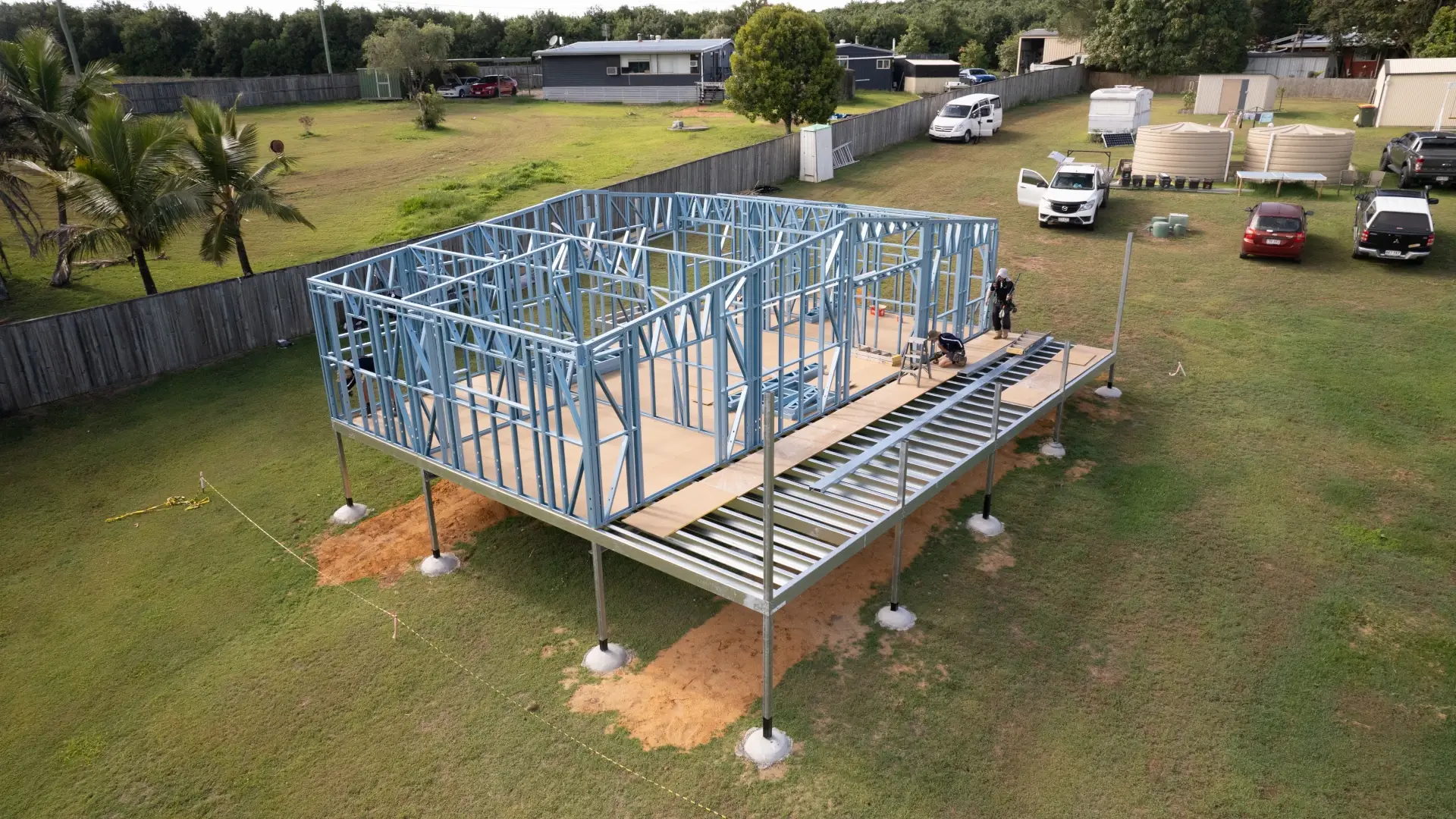
On 30 October 2024, Moreton Bay Regional Council introduced the Better Housing Amendment, rewriting the granny flat rules Moreton Bay property owners had been researching and planning around for years. If you found information about MBRC secondary dwelling rules before that date, it is now out of date — three key conditions changed simultaneously with the amendment.
This article explains exactly what changed. The focus is on the three updates that matter most: the new lot-size-linked GFA model that replaced the previous single cap, the inward orientation requirement for entries and outdoor areas in certain zones, and the prohibition on separate utility connections. Whether you own a suburban lot in Caboolture or a rural acreage block toward Woodford, these conditions apply differently depending on your lot size and zone — so the specifics matter considerably.
The New GFA Model: What the October 2024 Amendment Changed
Before 30 October 2024, Moreton Bay Regional Council applied a single maximum GFA cap for secondary dwellings across most residential zones. The Better Housing Amendment replaced that approach with a tiered model linked directly to lot size — and for rural landowners in particular, the change is significant.
The three tiers work as follows. On lots between 450m² and 800m², the maximum GFA is 45m². On lots over 800m², the maximum GFA increases to 55m². In Rural and Rural Residential zones, however, the maximum GFA rises to 100m² — by far the most generous rural secondary dwelling allowance among the SEQ councils this guide covers. According to MBRC's secondary dwellings page, these three tiers became effective from 30 October 2024.
The 100m² rural cap reflects a practical reality: a 45m² or 55m² secondary dwelling on a large acreage block would be disproportionately small relative to the primary dwelling and the land area. Rural and rural residential landowners, therefore, now have substantially more to work with under the new rules.
For suburban property owners, however, the tiers are noticeably tight. A 45m² maximum on lots between 450m² and 800m² — which describes a large proportion of standard residential lots across the region — leaves limited room for a comfortable layout. The shift from a single cap to three tiers means every MBRC property owner now needs to know their lot size, not just their zone, before they can determine their maximum allowable GFA. For a full picture of what is achievable on your lot, see Moreton Bay granny flat options from The Shed House.
The Inward Orientation Rule: Where Entries and Decks Must Face
One of the most distinctive conditions introduced under the Better Housing Amendment applies specifically to secondary dwellings in Suburban Neighbourhood and Coastal Communities zones. In those zones, the entry, patio, and any deck or outdoor living area of the secondary dwelling must face inward — toward the primary dwelling — rather than toward the street or a side boundary.
The intent is to maintain the visual appearance of a single dwelling from the road frontage. From the street, the property should read as one domestic building, not two independently oriented structures sitting on the same lot. In practical terms, this means the secondary dwelling's front door and any covered outdoor area face the backyard or the wall of the primary dwelling, not the footpath.
Importantly, this orientation rule does not apply in Rural and Rural Residential zones. In those zones, the secondary dwelling may face a different direction from the primary dwelling without triggering the orientation condition. That distinction gives rural landowners considerably more design flexibility when positioning a secondary dwelling on a large block.
For builders and designers, the inward orientation requirement is a design-stage constraint — not something that can be corrected during construction. A plan that positions the secondary dwelling's entry facing the street will not pass building certification in an affected zone without modification. As MBRC's secondary dwelling policy changes page confirms, this orientation requirement applies alongside the new GFA model as part of the Better Housing Amendment package.

Utility Connections: What Must Be Shared and What Is Prohibited
Moreton Bay Regional Council explicitly prohibits separate electricity or water connections for secondary dwellings. Both the primary dwelling and the secondary dwelling must connect through a single master electricity meter and a single master water meter — the connection from the street to the property must be a single point of supply for both dwellings.
Sub-meters within the property boundary are permitted. A separate sub-meter can record the secondary dwelling's consumption for billing purposes, which is relevant if you plan to rent out the secondary dwelling. However, that sub-meter sits behind the shared master connection point; it does not create an independent utility account for the secondary dwelling.
This prohibition is notably stricter than equivalent rules in some other SEQ councils. Gympie Regional Council, for example, allows a separate water meter while requiring shared electricity and telecommunications. Moreton Bay permits neither a separate electricity connection nor a separate water connection.
For owners planning a rental arrangement, utility costs will need to be managed through sub-metering or a negotiated agreement between the primary dwelling owner and the tenant. The building certifier will verify that the utility connection design complies with MBRC's requirements before issuing building approval — so this is not a detail that can be resolved after construction is complete.
The 50-Metre Proximity Rule and Height Limit
Beyond the GFA model and utility connection rules, two additional siting conditions apply simultaneously. First, the secondary dwelling must be located within 50 metres of the primary dwelling. That is a more generous distance allowance than Gympie's 20-metre rule, but it remains a meaningful constraint on large rural lots where the secondary dwelling might otherwise be sited well away from the main house.
Second, building height for secondary dwellings is generally limited to 5 metres across most MBRC zones. This height limit reinforces the visual requirement that the secondary dwelling presents as part of a single domestic property from the road frontage. Building form, materials, and landscaping should support that single-dwelling appearance — a person approaching from the street should perceive one property rather than two distinct buildings.
These conditions apply cumulatively with the GFA model, the inward orientation rule, and the utility connection prohibition. Therefore, a secondary dwelling must meet all five requirements simultaneously — correct GFA for the lot size, proximity within 50 metres, height within 5 metres, compliant inward orientation (in applicable zones), and shared utility connections — to be approved as compliant with the Better Housing Amendment. For context on how these MBRC requirements sit relative to a neighbouring council, see how Sunshine Coast secondary dwelling rules compare to Moreton Bay.
How to Check Whether Your MBRC Block Qualifies for Accepted Development
A secondary dwelling that meets all of the Better Housing Amendment conditions may qualify as code-assessable development under the MBRC planning scheme. Code-assessable development does not require a full Development Application — instead, it proceeds directly to building certification. That saves several weeks and the DA fee. However, the assessment pathway depends on the lot's zone and any applicable overlays.
Flood, bushfire, and environmental overlays can affect whether development is code-assessable or triggers a DA, even when the proposed design otherwise complies with the GFA and siting rules. To check overlay status for a specific lot, MBRC provides an online planning map where zone and overlay information can be reviewed. Cross-referencing that information against the secondary dwelling code for the applicable zone confirms whether a compliant design can proceed without a DA.
A private certifier familiar with the MBRC planning scheme can review a proposed design against the current code and confirm the assessment pathway before construction begins. This step is particularly useful for Rural Residential lots, where the 100m² GFA allowance gives more design flexibility but where the overlay picture is often more complex than a standard suburban block.
The Shed House builds council-compliant secondary dwellings in the Moreton Bay region and also offers kit home options in the Moreton Bay region for owner-builders working within the new GFA allowances. For sites with challenging terrain, a sloping block builder in the Moreton Bay region can advise on siting options before certifier review.
Ready to Plan Your Moreton Bay Secondary Dwelling?
The Better Housing Amendment has made Moreton Bay's rural and rural residential zones considerably more workable for secondary dwellings. The 100m² rural GFA cap gives acreage owners genuine scope to build something functional — a proper two-bedroom layout is achievable within that footprint. For owners on standard residential lots, however, the 45m² and 55m² tiers are tight, and making the most of that footprint requires careful design from the outset.
If you have a Moreton Bay block and want to understand what a compliant secondary dwelling would look like on your specific site, send an enquiry about your Moreton Bay property and include your lot size and zone. That information allows a direct, accurate answer on what is possible under the current rules.