

Walking into a shed home with a full raked ceiling is a noticeably different experience from stepping into a standard house. The volume hits you first — the ceiling rises from the walls along the roof pitch to a high central ridge, and the space feels generous and light in a way that flat-ceiling homes simply don't match.
If you've spotted raked ceilings in shed home photos and wondered whether this is a standard feature or an expensive upgrade, the short answer is: it depends on the structure. For steel portal frame homes specifically, the raked ceiling isn't an add-on. It's a direct consequence of the frame geometry, which is why raked ceilings in shed homes are often more accessible — and less costly to achieve — than the same feature in a conventional timber-framed build.
This guide covers why the portal frame suits a raked ceiling so naturally, what the real cost variables are, which glazing systems work best with a raked profile, and how to handle thermal performance in Queensland's warm climate.
Why Steel Portal Frames Naturally Produce Raked Ceiling Opportunities
A steel portal frame — the structural system used in both agricultural sheds and residential shed homes — is built from two vertical columns connected by a pitched rafter at the roof. That rafter follows the roof pitch without any flat ceiling framing below it. As a result, the underside of the roof structure is already the finished ceiling surface if you want it to be.
Compare this to a conventional timber-framed home. A flat ceiling frame is built below the pitched roof trusses, creating an attic space between the two. That attic hides services, holds insulation, and provides a thermal buffer — but removing it to expose the roofline requires additional engineering to re-route the load path. It's an upgrade in conventional construction because the structural system wasn't designed for it.
In a steel portal frame, however, the raked ceiling is already the structural geometry. The ridge line of a typical residential portal frame sits 5 to 6 metres above floor level at the apex, giving you a ceiling height that most conventional homes can't match without significant intervention. Because the frame doesn't need modification to expose the ceiling line, achieving a raked finish in a shed home typically costs less than the equivalent in a timber-framed build.
That's the foundational advantage of shed home designs from The Shed House for anyone researching raked ceiling options — the structural case is already made by the frame itself.
What a Raked Ceiling Does for Hinterland Living
The raked ceiling's value in a hinterland home goes well beyond the visual. Thermally, a high central volume buffers temperature swings more effectively than a low flat ceiling. Hot air rises naturally to the apex, creating a stratification effect — the upper zone absorbs heat while the living zone below stays cooler. In Queensland's warm climate, this passive thermal benefit reduces the load on mechanical cooling during the day without any additional system required.
Visually, the angled ceiling planes draw the eye outward toward glazed end walls and clerestory windows, strengthening the connection between the interior and the surrounding landscape. That relationship — between inside and outside, between the home and its hinterland setting — is central to how these homes are designed to be lived in.
For the Ilkley Range — hinterland lifestyle homes featuring raked ceilings and indoor-outdoor living, the raked ceiling works together with wide-opening sliding doors and deep verandahs to blur the boundary between the interior and the paddock or bush beyond. The ceiling isn't a discrete feature; it's part of an integrated spatial strategy.
The Sunshine Coast Council's proposed planning scheme also eases some previous barriers to greater ceiling heights in residential contexts. For shed homes in the Sunshine Coast LGA where a particularly high ridge line is part of the design brief, this is a relevant planning consideration worth raising with your building designer early.
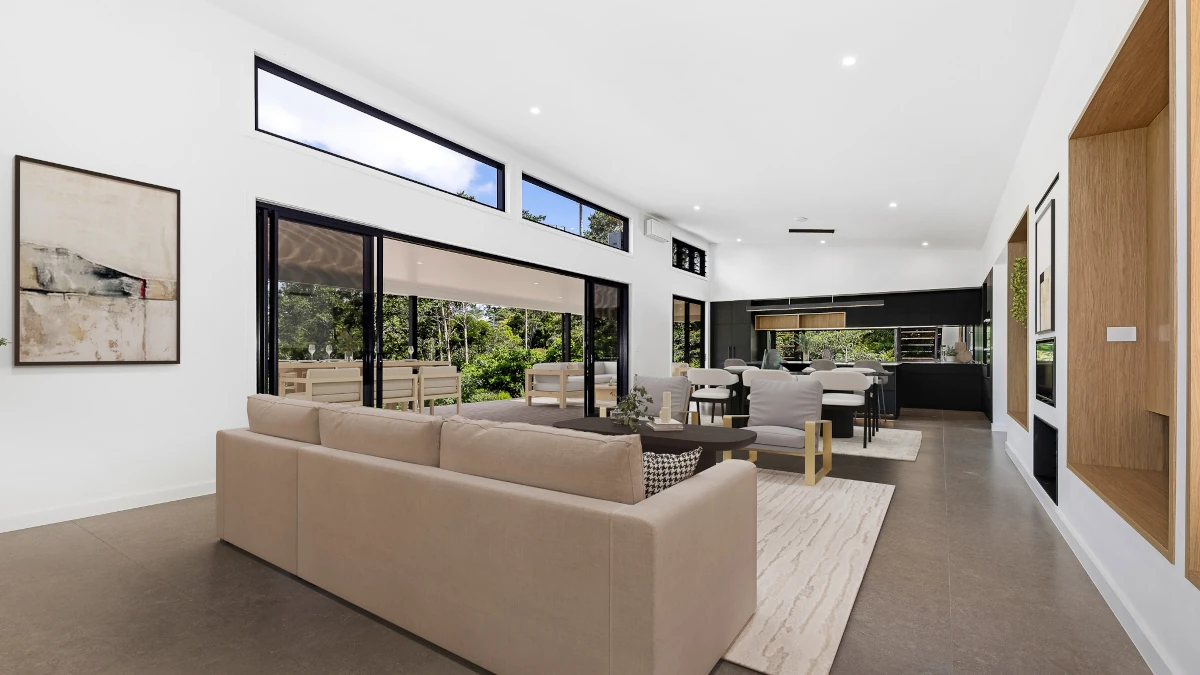
Glazing Options That Pair With Raked Ceiling Profiles
The raked ceiling geometry opens up glazing configurations that flat-ceiling homes simply can't use. At the gable end of a portal frame — the triangular wall where the two roof slopes meet — a full-height wall area runs from floor to ridge. That entire surface can be glazed, which creates an opening scale not achievable in most conventional homes.
The GJames 249 Sliding Door is commonly specified for gable-end openings in raked ceiling shed home builds. It's a large, floor-to-ceiling glazed door system that fills the gable opening and can open fully to an outdoor deck or verandah. When the panel is open, the distinction between inside and outside largely disappears.
For clerestory windows along the ridge line — high-level openings that bring diffused light into the apex of the ceiling — the GJames 076 Series sliding window suits smaller raked openings, while the 246 Sliding Door handles larger raked panels where more glass area is needed. Both products are well suited to Queensland's climate conditions.
In Bushfire Attack Level (BAL) zones — which cover significant portions of the Sunshine Coast and Noosa hinterland — window and door specifications must meet the relevant BAL rating. The GJames 132 Series Slider carries BAL-40 compliance, making it appropriate for medium-high bushfire exposure sites across the region.
For answers to common questions about shed home design, including glazing specifications and BAL requirements, the FAQ is a useful starting point.
Cost Implications: What Raked Ceilings Add to a Shed Home Build
In a steel portal frame shed home, achieving a raked ceiling is primarily a decision about internal lining — the structural frame already supports it. The cost variables break into four areas: the type and thickness of lining selected, the insulation specification for the rafter cavity, any exposed rafter or beam detailing, and the glazing at the gable end.
Plasterboard raked ceilings with bulk insulation in the rafter cavity are the most cost-effective option. The work is straightforward: fix plasterboard to the underside of the rafters, insulate the cavity above, and finish. Most residential shed home builds achieve this at a reasonable price point without premium finishes.
Exposed structural steel rafters with feature timber purlins — a popular aesthetic in Ilkley Range builds — add to the cost but produce a distinctive hinterland look that reads as deliberately designed. If the visual character of the roof structure matters to the brief, this is the specification worth pricing separately.
Full gable glazing using a GJames 249 door system adds to the end wall cost compared with standard cladding. However, the glazing often offsets the cost of the wall framing and cladding it replaces, so the net addition is typically less than the glazing price alone suggests.
The Shed House builds steel portal frame homes suited to raked ceiling designs across the Sunshine Coast hinterland — and as a sloping block builder on the Sunshine Coast for elevated, raked designs, the team regularly works through these cost trade-offs with clients from the earliest design conversations.
Thermal Performance: Insulating a Raked Ceiling in Queensland
The practical concern about raked ceilings in Queensland's climate usually comes down to insulation. A conventional flat ceiling with an attic above provides a double buffer — the insulation layer itself, plus the dead air space of the attic. A raked ceiling removes that buffer. The insulation in the rafter cavity becomes the only barrier between the hot steel roof above and the living space below, so the specification matters considerably.
Roof colour is a factor that often gets overlooked at the design stage. BlueScope Colorbond roofing products have documented solar absorptance values that vary by colour. Lighter colours — Surfmist and Shale Grey are common examples — have lower solar absorptance than darker colours like Monument or Basalt, which means they absorb less radiant heat through the roof surface. In a raked ceiling home, where there is no attic to buffer that heat before it reaches the insulation, the roof colour selection has a more direct thermal impact than in a conventional build. Lighter Colorbond colours are therefore worth specifying on raked ceiling homes in Queensland.
Sarking — reflective foil installed directly under the roofing material — is standard practice in raked ceiling applications and significantly reduces radiant heat transfer into the rafter cavity. Combined with well-specified insulation batts, sarking helps the roof assembly meet its thermal targets without requiring unusual insulation depths.
The total R-value of the roof assembly must also meet the NCC minimum energy efficiency requirements for the relevant climate zone. For most of the Sunshine Coast and Gympie hinterland, that means NCC Climate Zone 2 — a requirement worth confirming with your building designer before the specification is finalised.

Talk Through the Ceiling Package Before the Design Is Set
Raked ceilings work best when the glazing, insulation, and internal lining decisions are made together rather than resolved one at a time as the design progresses. The glazing specification at the gable end affects the thermal load on the rafter cavity. The lining choice affects whether exposed rafters read as a feature or a compromise. Each decision shapes the others, so making them in sequence — rather than as a package — often leads to trade-offs that could have been avoided.
That's why it's worth having the raked ceiling conversation at the design stage, not after the frame is contracted and the gable end treatment is already locked in. For clients exploring the Ilkley Range's raked ceiling configurations, or bringing their own design brief to the table, an early discussion about the whole ceiling package is the right starting point.
Send an enquiry to discuss your raked ceiling design brief or browse the Ilkley Range for design references before the conversation starts.