
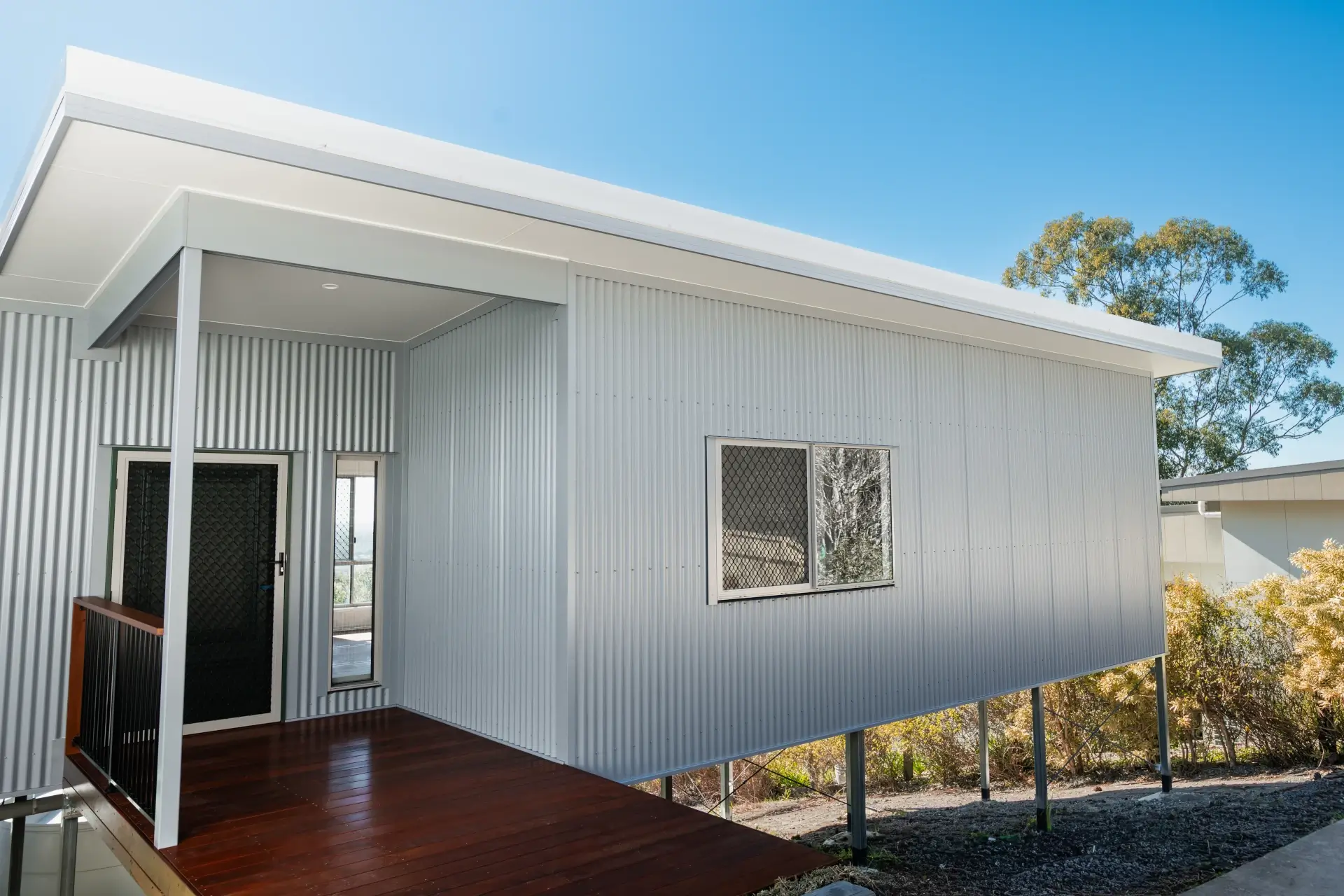
A sloping block can give you room to enjoy the views, catch a breeze and feel connected to the landscape. Building on it starts with understanding how your home can work with the land.
Many sloping sites can accommodate a home. The right design depends on the ground conditions, access, drainage and planning requirements, as well as your budget and the way you want to live.
You do not need all the answers before speaking with a builder. Start with your block details and home ideas. From there, the site checks and design decisions help turn those ideas into a practical plan.
This guide explains what to investigate, how different floor systems compare and what shapes the cost of building on a sloping block on the Sunshine Coast.
Can you build a house on a sloping block?
Many sloping sites can accommodate a home. Suitability depends on the proposed building location, ground conditions, access, drainage and applicable planning requirements.
An elevated floor system may allow a home to sit above the terrain. A split-level layout or a slab-based design may suit other sites. Each option needs to be assessed against the land and the brief.
Before choosing a design, establish:
- The fall across the proposed building footprint.
- Where the home can sit within relevant site constraints.
- How vehicles, trades and construction equipment will reach it.
- What investigations are needed to inform the foundations.
- How stormwater and essential services will be managed.
Together, these checks show what the design needs to respond to before you commit to a layout.
Understand the slope where your home will sit
A property may contain several possible building locations. The steepest part of the land does not necessarily describe the area where the home will be built.
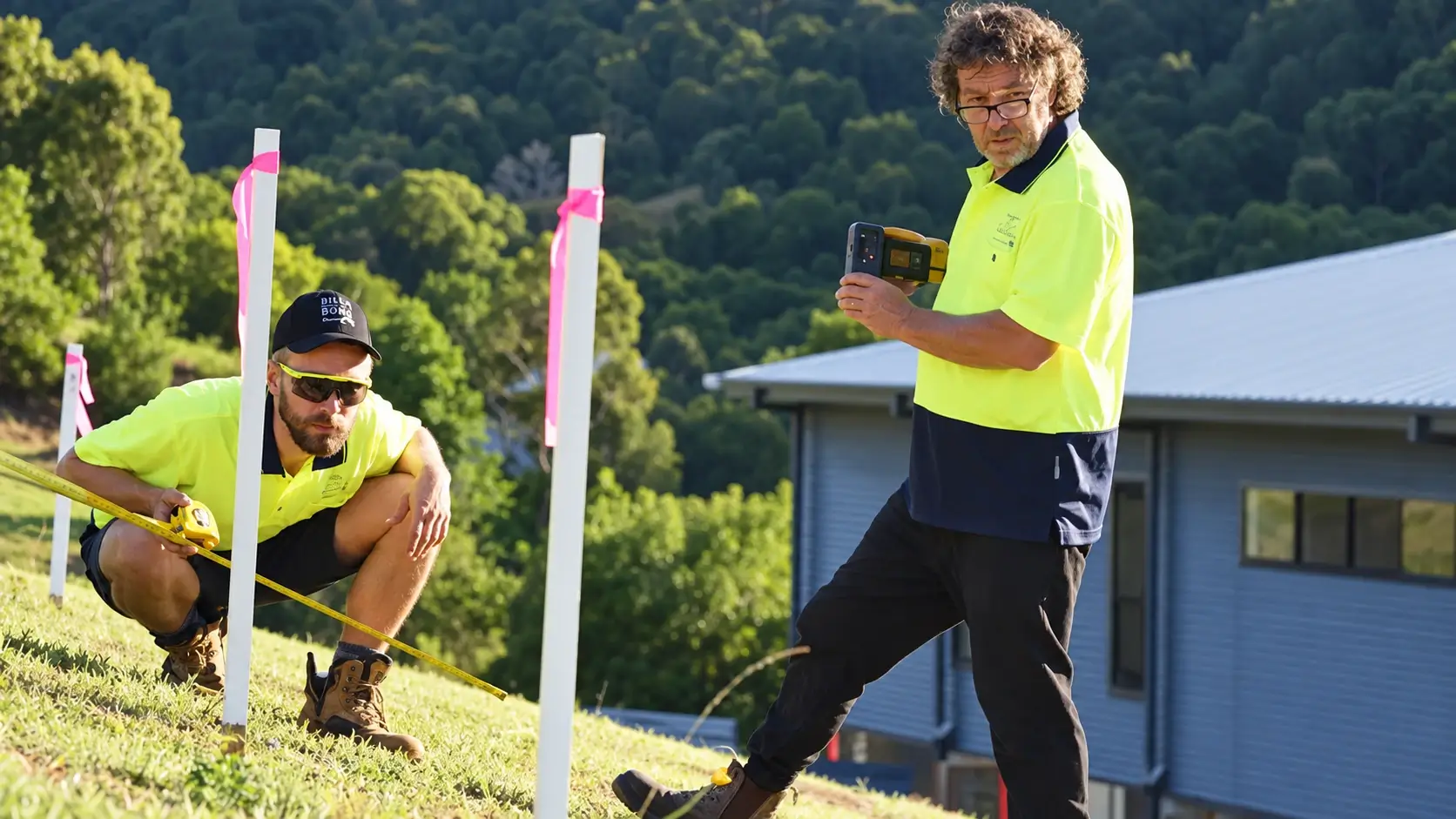
A contour survey helps the design team understand changes in ground level. Consider the fall from front to back and from side to side, together with the driveway and outdoor areas.
The distance matters too. A two-metre fall across a short footprint presents a different design problem from the same fall across a much longer area. Avoid choosing a foundation system from a height difference alone.
Think about how you want to use the home alongside the slope. Where will the morning light reach your living spaces? How will you get from the driveway to the front door, or from the kitchen to the deck?
A location that reduces earthworks may also change driveway length, privacy or access to outdoor areas. The aim is a home that works with both your land and your everyday life.
Check planning constraints before committing to a layout
For properties in the Sunshine Coast Council area, the council’s Development.i site report is a useful starting point. It provides general zoning, overlay and development information for individual properties.
The council’s planning scheme overlays include landslide hazard and steep land mapping, alongside other constraints that may affect a site. Check the relevant mapping rather than assuming that every sloping property has the same requirements.
Depending on the site and proposed development, the review may need to address building height, setbacks, bushfire or flood constraints, vegetation and earthworks. Existing approvals or building envelopes may also influence the available location.
Online property information is a starting point. Council explains that Development.i does not replace official property searches. Your planning adviser and building certifier can help confirm the requirements for your proposed home.
Planning, building and plumbing approvals address different parts of a project. Confirm which approvals apply and who will arrange them before work begins.
For land in Noosa or another council area, use that council’s planning information and approval requirements.
Which reports and investigations might you need?
The information required depends on the site, design and approval pathway. Different reports answer different questions.
| Information | What it helps establish |
|---|---|
| Contour survey | Ground levels and the relationship between the proposed home and the land. |
| Soil investigation and site classification | Ground conditions relevant to the design of footings and foundations. |
| Geotechnical or slope-stability assessment, where required | Site stability and conditions that may affect development. |
| Structural engineering | The design of the proposed foundations and supporting structure. |
| Other site-specific reports | Matters such as bushfire, flood, wastewater or other constraints relevant to the property. |
A soil classification helps inform the footings. A slope-stability assessment considers whether the ground is stable and what conditions may affect development. They answer different questions, so one does not replace the other.
Early design discussions can begin before every report is complete. However, assumptions may need to change as survey and investigation results become available. Ask what information supports an estimate and what still needs confirmation.
Suspended floors, slabs and split-level designs
The right approach depends on the whole site. Compare the work required to deliver a suitable home, including access, foundations, drainage and outdoor areas.
Suspended floor systems
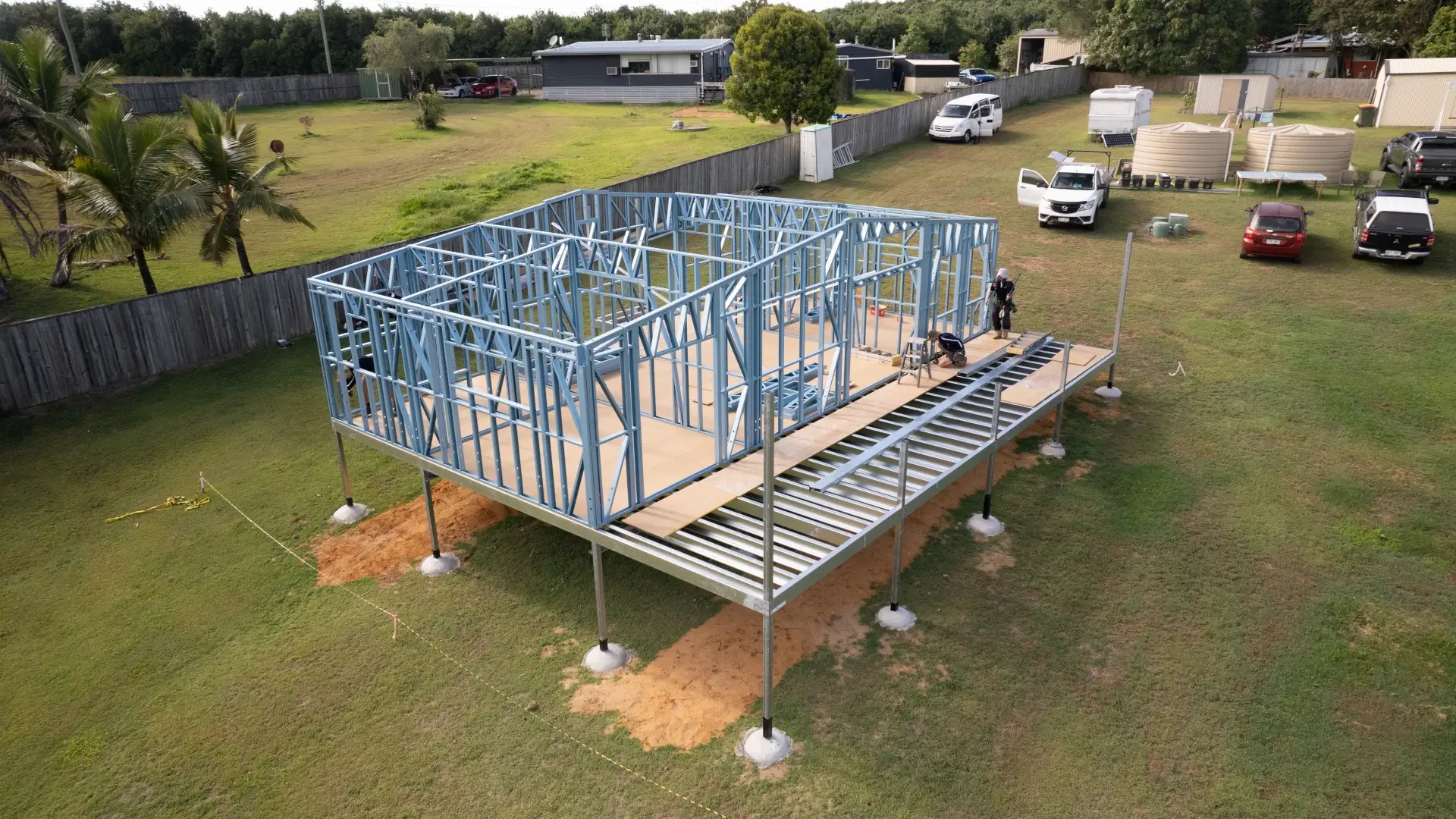
A suspended floor supports the home above the ground using an engineered structure. The Shed House uses engineered steel floor systems for sloping sites. On some blocks, this approach can reduce the excavation needed to create a large level building pad.
The design still needs suitable footings, structural support and access for construction. Earthworks may remain necessary for driveways, services or other parts of the site.
Space beneath an elevated home may provide opportunities for storage or parking. Usable space needs to be planned and priced: clearance, drainage, access, enclosure and approval requirements can affect what is possible.
Concrete slabs and prepared building pads
A slab-based design may suit some sites, particularly where a suitable building area can be prepared without extensive earthworks.
The comparison should include excavation, fill, retaining structures and drainage. A low slab price does not describe the complete cost of preparing a sloping site.
Split-level layouts
A split-level design may help a home respond to changing ground levels. Think about internal steps, moving between rooms and access to outdoor areas. These choices matter if you want the home to remain comfortable as your needs change.
For a more detailed comparison, read our steel floor system versus concrete slab guide. Have the preferred approach assessed for your particular land.
What affects the cost of building on a slope?
There is no reliable universal surcharge for a sloping block. The additional work depends on where the home sits and how the project is designed.
Important cost factors include:
- Investigations and engineering: the survey, reports and design work needed for the site.
- Foundations: the footing arrangement, support heights and structural requirements.
- Earthworks: excavation, fill, rock removal and disposal of excess material.
- Retaining and drainage: structures and water management required by the design.
- Access: driveway preparation, deliveries, machinery and construction working areas.
- Services: connections, trenching and any on-site water or wastewater systems.
- External areas: decks, stairs, paths, parking and landscaping included in the brief.
Compare complete scopes rather than isolated foundation prices. One option may reduce excavation while adding structural or access costs elsewhere.
QBCC’s guidance on seeking and comparing quotes highlights the importance of soil tests and contour surveys in justifying earthworks and footing costs. It also recommends checking who is responsible for removing excess soil.
For broader budgeting, read how much it costs to build a house on the Sunshine Coast.
How The Shed House assesses your sloping block
We begin with a discovery call about your land, home ideas, budget and timing. You can start without a soil report, contour survey or finished design. Share any documents you already have so we can understand the starting point.
For local building customers, our aim is to connect the agreed design, selections, approvals and construction stages. That gives you a clearer view of what you need to decide and what happens next, while leaving room for everyday life.
Early online checks help identify mapped planning constraints. They provide a starting point for discussion; they do not establish ground conditions, final engineering or approval outcomes.
An initial site consultation
For suitable projects within the regular service area, the Sales and Design team can arrange an obligation-free site consultation. The visit considers the terrain, access, potential building location, orientation and service requirements, together with how your preferred design could work on the land.
An initial consultation does not commit you to a construction contract. It helps identify the next steps and the information needed to develop the proposal.
What you receive after the initial review
Following the initial review, we prepare a Project Proposal outlining the proposed project, indicative pricing and the site-specific reports identified for the build.
The estimate is a planning tool, not the final construction price. Check which site works, services and other items it includes, excludes or leaves to be priced later. Detailed site plans and specialist investigations belong to the subsequent agreed stages.
Moving from the proposal towards construction
If you decide to proceed, the next stages develop the site plan, home design and selections, alongside the investigations needed for your project.
Our customer journey follows Design → Selections → Approvals → Construction → Move In. The proposal and subsequent agreements explain which stages we coordinate for your chosen pathway.
Engineering, reports and selections help establish the scope and construction pricing. Where a fixed-price construction contract applies, it covers the agreed work under its terms. Later changes or unforeseen conditions must be dealt with under that contract.
The responsibilities also depend on how you choose to build:
- Kit-only: you or your appointed builder organise the build around the supplied system. Confirm the components, documentation and available support, along with responsibility for approvals, labour and fit-out.
- Lock-up: the builder completes the agreed enclosed-shell stage. Your agreement should identify where that work ends and who manages the remaining fit-out.
- Turnkey: we coordinate the contracted stages through to completion. Check the inclusions for reports, fees, services, site works and external areas.
We will discuss which pathways are available for your location and project. Package names alone do not define everything included in the price.
What an initial visit cannot confirm
A visual site visit cannot establish underground soil conditions or confirm slope stability. It also cannot guarantee approvals, final foundation design or the final construction price. These depend on the relevant investigations, professional assessments and agreed scope.
The timing of preliminary work varies with the design, reports and approvals required. Ask for an indicative schedule for your project rather than relying on a universal timeframe.

Read our preliminary-process guide for the broader pathway towards design, reports and pricing.
What to prepare for your first conversation
Bring the information you have. You do not need to commission technical reports simply to contact the team.
- The property address and whether you own it or are considering purchasing.
- Any survey, soil report, approvals or building-envelope information already available.
- Photos and observations about the building area, slope, access and services.
- Your preferred home size, bedrooms, outdoor areas and accessibility needs.
- Your approximate total budget and finance status.
- Your preferred timeframe and kit-only, lock-up or turnkey pathway.
If you are considering buying land, identify the property and ask what initial guidance is available. Confirm access permission before arranging any visit to land you do not own. An early discussion does not replace your purchase due diligence.
Choosing a builder for a sloping site
Look for relevant completed projects and ask the builder to explain how their team assessed the land. The most useful evidence connects the site challenge to the design and construction response.
Questions to ask include:
- Have you completed homes with similar slope and access conditions?
- What site information do you need before recommending a structural approach?
- Who coordinates the survey, reports, design and engineering?
- What does the estimate include, exclude or leave as an allowance?
- What must be confirmed before a construction price can be agreed?
Explore our Sunshine Coast sloping-block building services for more about our approach, then discuss the requirements of your land.
Frequently Asked Questions
No. Compare the complete site and construction scope. Slope, ground conditions, access, earthworks and drainage can change which approach is suitable and cost-effective.
The need for a report depends on the property's conditions, applicable planning requirements and professional advice. Check what is required for your proposed development.
No. You can begin with a discovery call and the property information you already have. The team can explain which investigations are relevant and what needs to happen next.
The initial Project Proposal provides indicative pricing. Check its assumptions and exclusions. More detailed pricing requires the relevant reports, design, selections and project-specific scope.
It may be possible, depending on clearance, access, drainage, structural design and approvals. Include that requirement in the brief so the necessary work is assessed and priced.
An early conversation can help identify information to investigate before purchase. It does not replace independent due diligence, formal reports or confirmation of approvals.
Build a home that works with your land
Your slope is one part of the brief. The goal is a home that suits the site, feels right to live in and has a clearly defined path to construction.
Our Sunshine Coast builders team brings the agreed stages together, with decisions explained along the way. You can start with a property address, a few ideas and the questions you want answered.
Discuss your block and home plans with The Shed House so we can help you understand the next steps.
This guide provides general information, not site-specific engineering, planning or purchasing advice. Requirements vary by property and proposed development. Confirm the current requirements with the relevant council, building certifier and qualified consultants before committing to a design or purchase.