
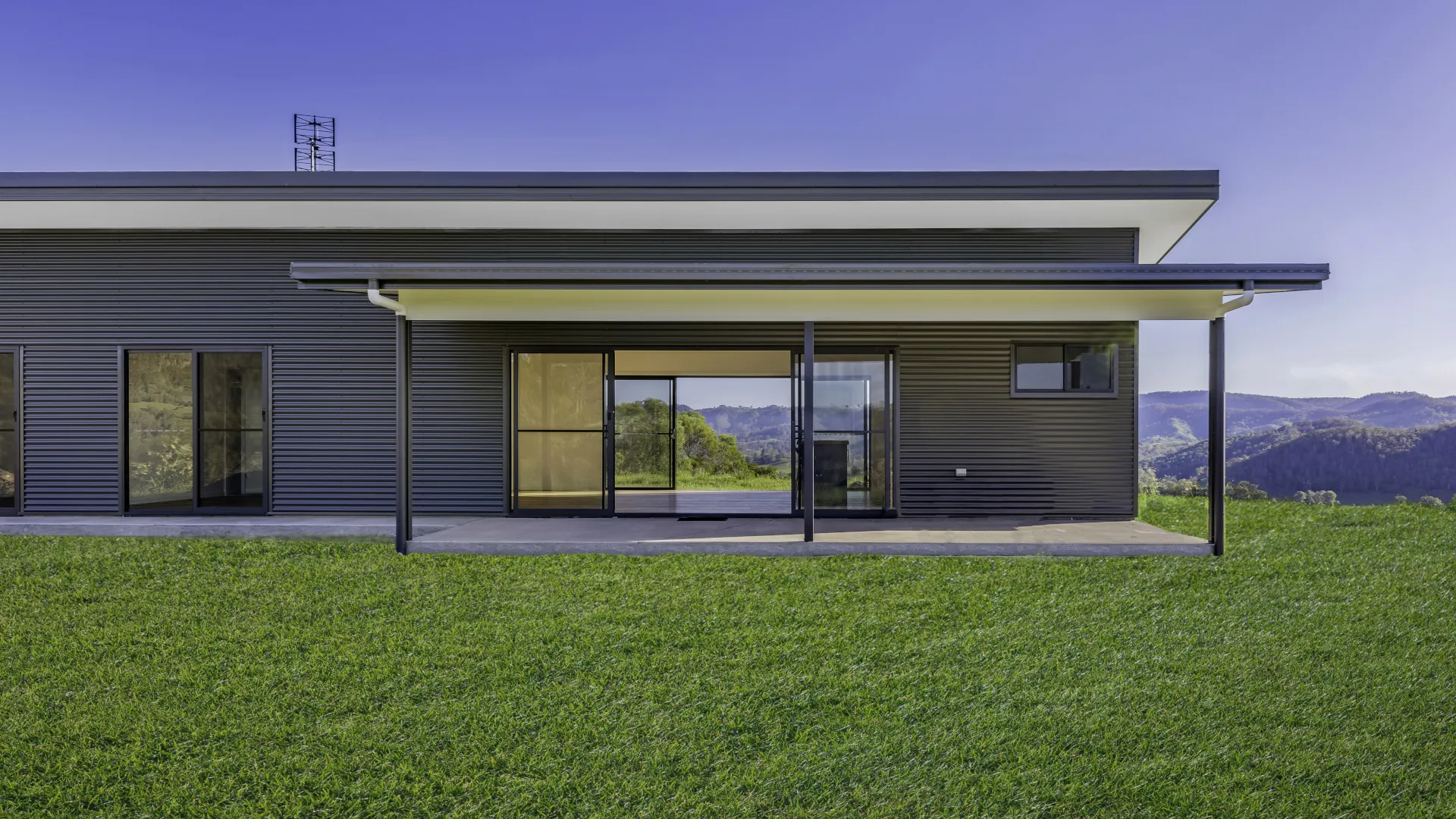
“Liveable shed” is not an official building category. You will not find it in any council planning scheme or on any QBCC certificate. What you will find — if you look at how these buildings are actually approved — is the term Class 1a. That is the National Construction Code classification for a single residential dwelling, and it is the classification every liveable shed Queensland builder must achieve before a steel-framed home can legally be occupied.
The right question is not “is it a shed?” but “what building class is it?” The answer determines everything: the approval pathway, the bank’s willingness to lend against it, and whether your insurer treats it as a home. This article explains what Class 1a means, what it requires in practice, and how a steel-framed structure earns that classification.
Class 10a vs. Class 1a: The Classification That Changes Everything
The National Construction Code classifies buildings by their intended use. Class 10a covers non-habitable structures — garden sheds, garages, carports, and storage buildings. A Class 10a structure cannot legally be used as a place of human habitation. Class 1a covers single dwellings: houses, townhouses, and any building used as a primary place of residence.
The line between these two classes is the point at which a steel-framed structure becomes a home rather than a shed. A building cannot exist in both classes simultaneously. A steel structure used as a home must be classified and certified as Class 1a regardless of its external appearance — corrugated Colorbond walls and a pitched roof do not, on their own, determine the class. The council, QBCC, and lenders will only recognise it as a residential dwelling if it has been approved and certified accordingly.
Calling a building a “liveable shed” is informal shorthand. However, it is useful shorthand because it describes the combination of characteristics that makes these buildings appealing: the structural economy and wide-span capability of a shed frame, combined with the interior finish and legal classification of a home. The informal name has no legal weight — the Class 1a certificate does.
What a Class 1a Shed Home Must Include Under the NCC
For a steel-framed home to achieve Class 1a classification, it must meet specific minimum requirements under the National Construction Code. These apply regardless of the building material — a steel-framed home must satisfy the same NCC standards as a timber-framed or brick-veneer home.
Required habitable facilities include: a kitchen with a benchtop and sink; bathroom facilities with a toilet, basin, and shower or bath; a separate laundry sink (the kitchen sink cannot double as the laundry tub); and a dedicated entry point. These are minimum requirements — the dwelling cannot be certified as Class 1a without each of them in place.
Fire safety requirements include interconnected hardwired photoelectric smoke alarms compliant with AS 3786-2014. According to Master Builders Queensland’s smoke alarm guidance, these apply to all Class 1a dwellings across Queensland. If the building sits within 900mm of a side or rear boundary, the walls facing that boundary must achieve a minimum fire resistance level of 60/60/60 — meaning structural adequacy, integrity, and insulation are each maintained for 60 minutes under fire conditions. This is the NCC standard notation, and it applies whether the wall is steel-framed, timber-framed, or masonry.
Sound insulation requirements also apply where habitable rooms share a wall with an attached garage or non-habitable space.

Why Steel-Framed Homes Are Well Suited to Class 1a Approval
Steel portal frame construction — the structural system used in agricultural sheds and increasingly in residential homes — meets NCC structural requirements when designed by a qualified structural engineer and built to the engineering specifications. The system is not a shortcut; it is a legitimate structural approach that has been used in Queensland residential builds for decades.
One practical advantage of steel framing is the strength-to-span ratio. Steel allows large open-plan floor spaces without internal load-bearing walls, which produces the wide, uninterrupted interiors that give liveable sheds their distinctive character. For buyers drawn to open-plan living or raked ceiling lines, this is a genuine structural advantage, not a styling choice.
TrueCore engineered steel frames offer a further advantage specific to Queensland: termite resistance. In subtropical and tropical zones where timber framing requires ongoing chemical treatment to resist termite damage, TrueCore steel requires none. That reduces long-term maintenance obligations and satisfies lenders who factor termite risk into valuations. The Shed House uses TrueCore engineered steel frames in its shed home and kit home builds — a product choice that signals genuine residential engineering rather than repurposed agricultural framing.
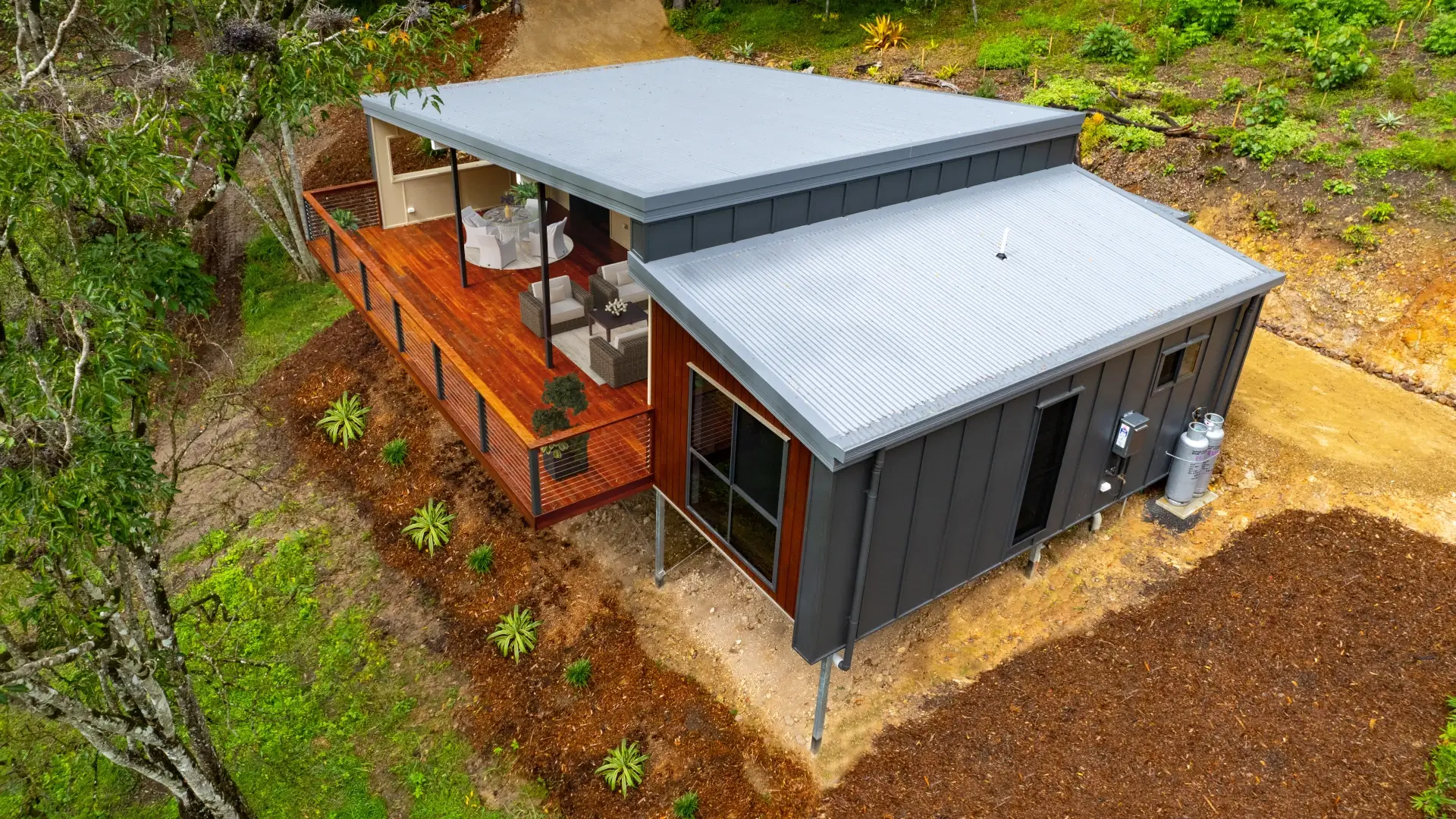
Externally, the frame is clad with James Hardie™ Fine Texture Panels or Colorbond cladding, then insulated and finished to residential standard internally. The Ilkley Range — hinterland lifestyle homes with raked ceilings and indoor-outdoor living and the EVO Range — modular homes designed to grow with a family over time both follow this structural approach, combining steel portal frames with residential-grade fit-outs that satisfy Class 1a certification requirements.
Building Approval for a Liveable Shed: What the Process Involves
A new Class 1a shed home in Queensland requires building approval from a licensed building certifier. Planning approval may or may not be required separately, depending on the lot’s zone and any applicable overlays.
In most residential zones across the Sunshine Coast, Noosa, Gympie, and Moreton Bay, a Class 1a dwelling qualifies as Accepted Development when it complies with the planning scheme’s acceptable outcomes — meaning no Development Application is needed and the project goes directly to building certification. The certifier checks structural compliance against the engineering documentation, NCC compliance across habitable facilities and fire safety, and council setbacks before issuing the building permit.
Plumbing approval for the kitchen, bathroom, and laundry is a separate permit, issued by a licensed plumber. It runs in parallel with the building approval process and must be in place before the dwelling can be certified and occupied.
Where a block sits within a bushfire overlay zone, additional compliance requirements apply. BAL (Bushfire Attack Level) ratings affect window specifications, subfloor ventilation, and the choice of external cladding materials — affecting both design and budget. The Sunshine Coast Council’s proposed planning scheme also requires deep planted landscapes and appropriate setbacks proportional to building height, regardless of whether a Development Application is triggered. For frequently asked questions about shed home approvals, these zone-specific conditions are often the most variable element across otherwise similar projects.
Can a Shed Home Be Financed and Insured Like a House?
The short answer is yes — but only if the building is properly classified and certified. A steel-framed structure approved and certified as Class 1a is eligible for standard residential mortgage finance and home insurance. Banks and lenders assess legal classification, not external appearance.
The key step is ensuring the approval and certification are completed correctly before the loan is finalised. A lender will require evidence of building approval and the Certificate of Classification as part of the loan documentation. A building certified as Class 1a and registered on the property title as a residential dwelling meets the definition mainstream lenders require.
The problem arises when a building is used as a home without being formally approved and certified as Class 1a. An unapproved structure used as a dwelling creates a financing problem — lenders will not treat it as a residential security, and insurers may refuse coverage. This is the critical distinction: the paperwork that makes a steel-framed building a legal home is the Class 1a certification, not the beds inside it.
For readers with a specific block in mind, The Shed House builds steel-framed homes designed to meet Class 1a residential standards under the NCC. Browse shed home designs that meet Class 1a residential standards to see what these homes look like at different scales and budgets, or send an enquiry about your block and the Class 1a approval pathway to understand what the approval process looks like for your specific lot and council zone.