
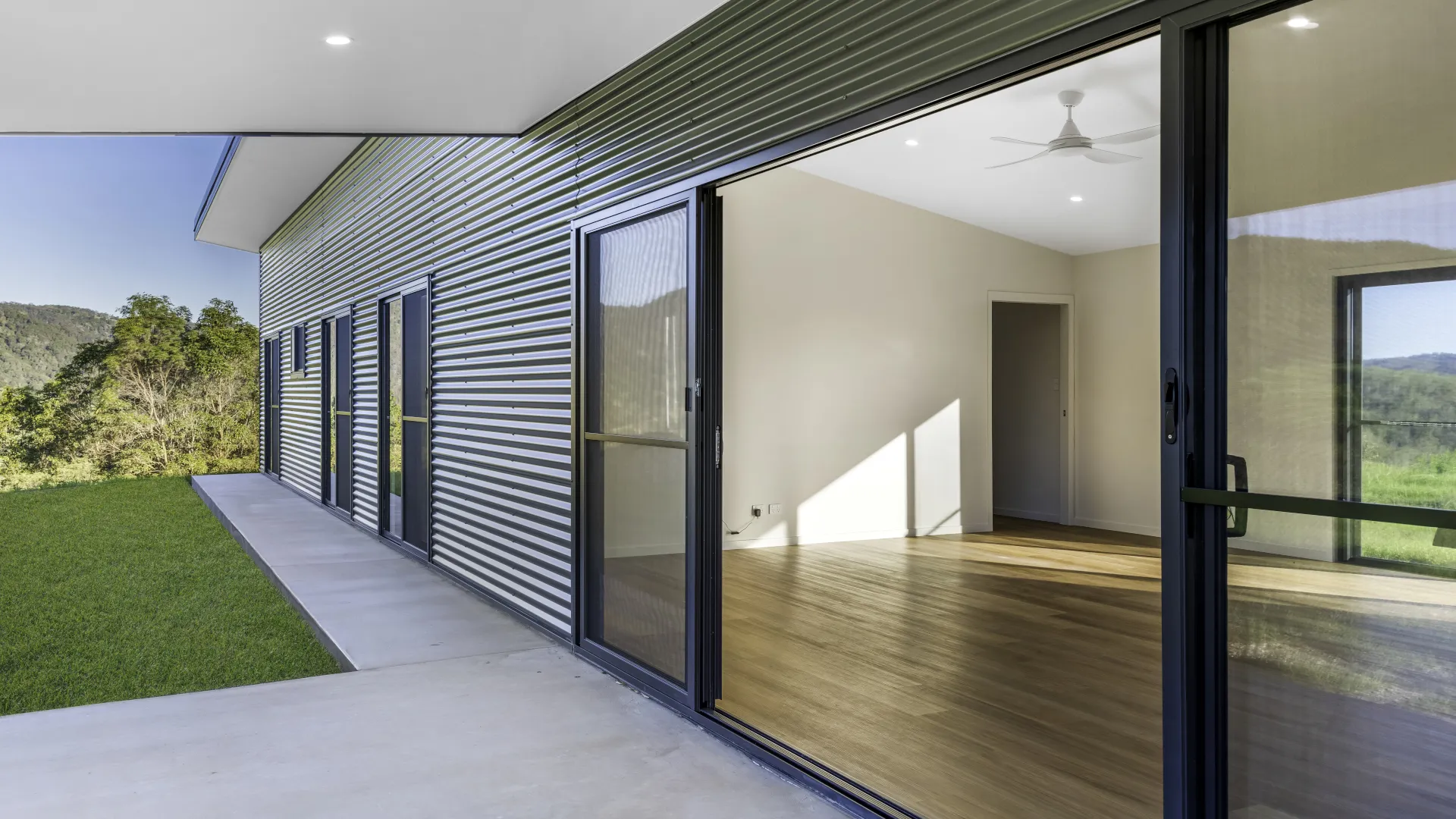
Many Gympie Regional Council landowners find out only after they start planning that Gympie has rules for secondary dwellings that differ meaningfully from the state defaults and from neighbouring councils. The most distinctive one — the 20-metre proximity rule — is not widely known, and it catches many owner-builders off guard when the certifier raises it late in the process.
If you have land in the Gympie region and are planning to add a granny flat, understanding the specific granny flat rules Gympie applies — before spending money on design — is the practical starting point. This guide covers the 70m² size limit, the 20-metre rule, the shared utilities requirement, and what Accepted Development actually means for Gympie landowners in practice.
The 70m² Size Limit: What It Covers and What Gympie Measures
Gympie Regional Council sets a maximum gross floor area of 70m² for secondary dwellings. GFA includes all enclosed habitable floor space — bedrooms, living areas, kitchen, and bathroom — but excludes uncovered outdoor areas such as decks, verandahs, and carports. A covered deck attached to the dwelling does not count toward GFA; an enclosed room does.
The 70m² limit is slightly more generous than Noosa Shire's 65m² cap, however Gympie applies additional proximity and utility conditions that Noosa does not. For guidance on Gympie granny flat options from The Shed House and how these size limits translate to practical floor plans, the Gympie-specific landing page covers design configurations that sit comfortably within the 70m² cap.
One secondary dwelling per lot is permitted. Landowners wishing to add a second secondary dwelling on a large rural lot must seek specific council approval through a Development Application — the Accepted Development pathway does not extend to multiple secondary dwellings on a single title. The secondary dwelling must also remain subordinate to the primary residence and cannot be sold separately, strata-titled, or operated as an independent property.
The 20-Metre Rule: Why Distance from the Main House Matters in Gympie
Gympie's most distinctive granny flat rule is the 20-metre proximity requirement. According to the Gympie Regional Council Secondary Dwellings Fact Sheet (February 2025), the secondary dwelling must be located no further than 20 metres from the outermost projection of the primary dwelling. That measurement is taken from the closest point of the primary dwelling's structure — including eaves and covered areas — to the closest point of the secondary dwelling.
The rule is designed to maintain a clustered appearance on Gympie's typically rural and semi-rural lots. The intent is that both structures read as a single developed area on the property, rather than two separate isolated buildings at opposite ends of a large block.
For owners of substantial rural properties who want to place a granny flat at a distance from the main house — for example, adjacent to a different road frontage, near a dam, or in a separate cleared area of a large paddock — the 20-metre rule will likely prevent Accepted Development status. In those cases, the project moves into a Development Application process before building approval can be issued. That adds time and cost to the project that does not apply when the placement is within 20 metres.

Shared Utilities: What Must Be Shared and What Can Be Separate
Gympie Regional Council requires secondary dwellings to share specific utilities with the primary residence rather than having independent service connections. Telecommunications infrastructure, electricity supply, and rubbish collection must all be shared between the two dwellings.
However, a separate water meter is permitted — and in fact required. The secondary dwelling's water consumption must be measurable independently from the primary dwelling, typically to facilitate water billing arrangements between occupants. This means the plumbing design must include a sub-meter or separate water meter at the secondary dwelling while still operating from the primary lot's main water supply connection.
The utility-sharing requirement directly affects electrical and telecommunications design. The secondary dwelling's power supply must branch from the primary dwelling's connection, rather than from a new service point at the street. Owners planning to rent out their secondary dwelling should therefore confirm with their electricity provider how sub-metering will work within the shared connection structure before the electrical design is finalised. Separate letterboxes are not required; secondary dwellings in Gympie may share the primary dwelling's mail address.
What Counts as Accepted Development in Gympie
Accepted Development status means the project can proceed directly to building certification without a Development Application — saving council processing time and DA fees. In Gympie, a secondary dwelling qualifies as Accepted Development only when all of the following conditions are met simultaneously.
The dwelling must be located within a Residential Living Zone. The GFA must not exceed 70m². The secondary dwelling must sit within 20 metres of the primary dwelling's outermost projection. Utilities — telecommunications, electricity, and rubbish collection — must be shared with the primary dwelling. And a separate water meter must be provided.
If any single condition is not met, the project shifts from Accepted Development into a code-assessable or impact-assessable category. A Development Application is then required before building approval can be issued. Building certification from a licensed certifier is mandatory regardless of planning status — Accepted Development removes the DA requirement, but it does not remove the building approval requirement.
For comparison, how Sunshine Coast secondary dwelling rules compare to Gympie and Moreton Bay's secondary dwelling rules after the October 2024 amendment cover how neighbouring councils handle the equivalent decision points differently.
Rural Zones and Larger Lots: When Gympie's Rules Get More Complex
Gympie's Accepted Development pathway applies within Residential Living Zones. Rural, Rural Residential, and other non-residential zones may have different requirements — or may require a Development Application for secondary dwellings regardless of size and proximity.
On larger rural lots, the 20-metre rule is often the primary constraint. Rural properties in the Gympie region commonly have irregular topography, existing infrastructure such as sheds and water tanks, access tracks positioned away from the house, and cleared areas that make practical building sites obvious — but those sites may well sit more than 20 metres from the primary dwelling.
Before committing to a design on a rural or rural residential block, confirming which zone the lot sits in under the Gympie Planning Scheme v4.0 is the critical first step. A planning and building consultant familiar with the Gympie Planning Scheme v4.0 can advise on whether a proposed placement qualifies as Accepted Development or requires a DA before any design work is finalised — catching that question early saves significant rework later.
For owners on rural lots who are also considering kit home options, kit home options in the Gympie region covers how primary dwelling and secondary dwelling builds can be staged on the same property.

Ready to Check Whether Your Gympie Block Qualifies?
For most Gympie residential lots where the proposed secondary dwelling comfortably sits within 20 metres of the main house, the granny flat rules Gympie applies are straightforward — and Accepted Development status is achievable without a DA. Rural and rural residential properties are where the 20-metre rule and zoning conditions add complexity that is worth understanding before design costs accumulate.
The Shed House builds council-compliant secondary dwellings in the Gympie region, with Kit-Only, Lock-Up, and Turnkey service tiers available depending on how much of the build the owner wants to manage. If you have a Gympie property and want to understand whether your proposed placement qualifies as Accepted Development, send an enquiry about your Gympie property with the block address and a brief description of the site — that's the practical starting point before design work begins.