
A structural warranty on a new home sounds straightforward. If something goes wrong with the structure, the warranty pays to fix it. In practice, several different protections may apply, and each one has its own scope, conditions and claim process.
For a Queensland build, the paperwork may include the building contract’s maintenance period, cover under the Queensland Home Warranty Scheme, and separate manufacturer warranties for products such as steel framing, roofing, windows and appliances. These protections can overlap, but they are not interchangeable.
The most important question is not simply, “How long is the warranty?” It is:
Who is responsible for this part of the work, what type of failure is covered, and what conditions must be met before a claim can be accepted?
This guide explains how the main protections work and why the answer differs between kit-only, lock-up and turnkey projects.
Disclaimer: This article provides general information only and is not legal or insurance advice. Eligibility for the Queensland Home Warranty Scheme depends on the work, contract, parties, premiums paid and circumstances of any claim. Requirements and time limits may change. Check the current QBCC guidance and obtain independent legal or insurance advice for your project before relying on this information.
The Four Protections Buyers Commonly Call a “Structural Warranty”
The term structural warranty is often used loosely. It may refer to one of four different protections.
| Protection | Who provides or administers it? | What it generally relates to |
|---|---|---|
| Contract maintenance or defects liability period | Your builder, under the building contract | Defects or omissions identified shortly after completion |
| Queensland Home Warranty Scheme | QBCC | Eligible losses arising from non-completion, defective work, subsidence or settlement |
| Manufacturer or product warranty | Product manufacturer or supplier | A specified product or material, subject to its warranty terms |
| Australian Consumer Law guarantees | Applies by law to eligible goods and services | Basic guarantees that goods and services meet applicable consumer standards |
Home and contents insurance is separate again. It deals with insured events under your policy, rather than poor workmanship, a product defect or a contractor failing to complete the build.
What Counts as a Structural Defect?
A structural defect is more serious than a cosmetic imperfection or minor finishing issue. It generally affects the structural performance, stability or safety of the building or an important structural element.
Depending on the cause and severity, examples may include:
significant foundation movement or settlement
failure of structural framing, beams, columns or load-bearing walls
serious roof structure movement
major cracking linked to structural movement
inadequate structural bracing or tie-downs
failure of an engineered suspended floor system
Not every crack is a structural defect. Minor shrinkage cracking, paint imperfections, a sticking door or an isolated plasterboard joint may be non-structural. However, the visible symptom does not always reveal the underlying cause. Repeated cracking or doors moving out of alignment could indicate foundation or frame movement and may require inspection by a suitably qualified building professional or structural engineer.
What Is the Queensland Home Warranty Scheme?
The Queensland Home Warranty Scheme is compulsory for most residential construction work valued at more than $3,300, including labour, materials and GST. The licensed principal contractor responsible for the insurable work must collect the premium from the homeowner through the contract price and pay it to the Queensland Building and Construction Commission within the required timeframe. This responsibility sits with the licensed contractor carrying out the relevant insured scope; the insurance cannot be transferred between contractors.
According to the QBCC’s explanation of home warranty insurance, the scheme may assist with eligible losses when:
a contractor does not or cannot finish the contracted work
a contractor does not rectify defective work
the building is affected by subsidence or settlement
an accepted non-completion project is damaged by specified events while incomplete
For fixed-price residential contracts, both non-completion and defective-work claims may be covered. Cost-plus contracts are only covered for defective-work claims because there is no fixed final contract price against which a non-completion loss can be measured.
The scheme is a safety net, not a promise that every defect will automatically be repaired by the QBCC. Eligibility, exclusions, maximum entitlements and strict claim deadlines apply. The QBCC generally expects the homeowner and contractor to try to resolve defective work first.
How Long Does QBCC Home Warranty Cover Last?
QBCC states that the general period of cover is 6 years and 6 months from the earliest of:
the date the premium is paid
the date the contract is entered into
the date work starts
The period may be extended where the residential construction work takes longer than six months to complete.
Claim deadlines are just as important as the overall cover period. Under the QBCC’s current time limits:
a structural defect must first be noticed within the applicable cover period, and the claim must generally be made within three months of becoming aware of it
a non-structural defect must generally be noticed within six months after substantial completion, with the claim made within seven months after substantial completion
These deadlines are easy to misunderstand. A homeowner should not wait until the end of the 6-year-and-6-month period to report a structural concern discovered earlier.
The Builder’s Maintenance Period Is Different
Most contracts for new homes and major residential work include a maintenance period, also called a defects liability period. The contract should state how long it lasts, how defects must be reported, and when the builder must be given access to inspect and rectify them.
The QBCC notes that new-build or major-renovation contracts commonly provide a period of six or 12 months. The exact period for your project comes from the signed contract, so it should be checked rather than assumed.
During this period, homeowners usually prepare a written list of items such as:
doors or windows requiring adjustment
minor leaks or sealant issues
incomplete paint or finishing work
cracked tiles or defective fittings
other workmanship items within the builder’s contracted scope
Reporting an item during the maintenance period does not automatically classify it as structural. It simply gives the builder a clear opportunity to inspect and address the issue under the contract.
The QBCC recommends reporting defective work promptly, even where a maintenance period applies. Written records, dated photographs, inspection reports and copies of correspondence can all help establish when the problem was noticed and what steps were taken.
What Does a Manufacturer’s Structural Warranty Cover?
A manufacturer’s warranty normally covers a particular material or product. It does not automatically cover the complete home, every cause of failure, or all labour needed to expose and replace the affected component.
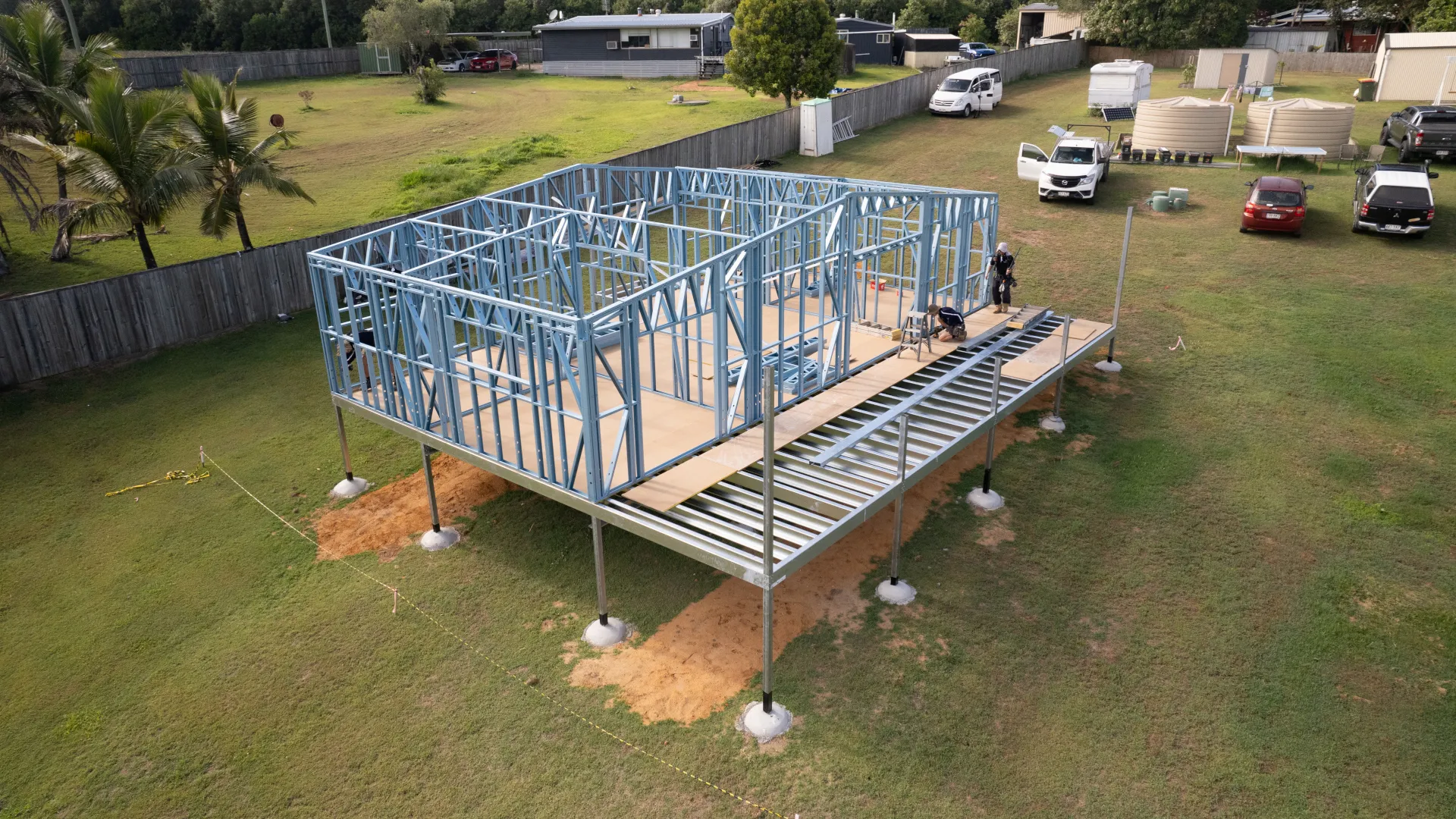
For example, BlueScope states that eligible residential applicants may obtain a warranty of up to 50 years for an entire house frame made from TRUECORE® steel. Warranties of up to 25 years may be available for certain structural subsystems, such as wall frames, roof trusses or intermediate floors.
That headline period needs context. The TRUECORE® steel warranty information makes clear that eligibility and conditions apply. The sample entire-frame warranty relates specifically to the material’s life before corrosion causes structural failure. It is not a blanket 50-year warranty against any movement, poor installation, moisture problem or damage involving the frame.
The sample terms also include conditions concerning:
correct installation and maintenance
compatible fasteners, flashings and adjoining materials
protection from ground moisture and prolonged weather exposure
building classification and intended use
proximity to surf or exposed marine influences
notification and evidence requirements when making a claim
The remedy may also be limited. A product warranty might provide replacement material or the cost of repairing the affected product while excluding removal, installation or consequential costs. Always read the actual warranty issued for the project rather than relying on a general brochure or headline warranty period.
For more detail on the framing material used in Shed House projects, see our guide to TRUECORE® steel framing.
What Is Typically Not Covered?
Exclusions vary, but structural and product warranties commonly do not cover problems caused by matters outside the warrantor’s responsibility.
Examples can include:
normal wear and tear or routine maintenance
cosmetic issues that do not affect structural performance
unauthorised alterations made after handover
work performed by another contractor
damage caused by neglect, misuse or failure to maintain the building
weather events, flood, fire or accidental damage that should be considered under another insurance policy
design, manufacture or installation faults outside a product manufacturer’s responsibility
corrosion caused by incompatible materials, moisture exposure or unsuitable environmental conditions
items outside the written contract or supplied package
Cause matters. A roof leak might result from defective roofing material, incorrect flashing installation, storm damage, blocked drainage or later work by another trade. The same symptom could therefore sit under different contracts, warranties or insurance policies.
How Warranty Coverage Changes by Build Tier
The building design may be the same across different service tiers, but responsibility for completing it is not. You can compare the full project scopes in our kit-only, lock-up and turnkey guide.
| Build tier | The Shed House scope | Main QBCC and warranty consideration |
|---|---|---|
| Kit-only | Design, engineering and specified materials supplied to site | If the customer completes the project as an owner-builder, the owner-builder work is not insurable under the Queensland Home Warranty Scheme. Product and supply warranties may still apply to specified components. |
| Lock-up | Structural shell completed to the agreed lock-up scope | The licensed principal contractor is responsible for the QBCC premium for its insurable contracted scope. If the owner then completes the remaining work under an owner-builder permit, that owner-builder work is not covered by the scheme. |
| Turnkey | Full construction managed through to completed handover | The licensed principal contractor is responsible for the QBCC premium for the insurable residential construction work in its contract. Individual product warranties may also apply to materials, fixtures and appliances. |
Kit-Only
With a kit-only project, the distinction between supplied materials and completed building work is critical. The kit supplier may provide engineered documentation and component warranties for the products included in the package. However, the owner-builder or separately engaged builder manages site preparation, footings, erection, weatherproofing, services and fitout.
If a frame is damaged during storage, installed contrary to the engineering details, exposed to moisture for too long or altered on site, the issue may not be a defect in the supplied product. Warranty responsibility will depend on who performed the work and what caused the failure.
Where the project is undertaken or supervised under an owner-builder permit, the owner-builder work is not insurable under the Queensland Home Warranty Scheme. In practical terms, there is no 6-year-and-6-month QBCC home warranty cover for that owner-builder work. If the property is later sold, the purchaser does not gain QBCC cover for the owner-builder work simply because ownership changes.
This is different from manufacturer warranties for supplied components, which may continue according to their own terms. It is also important to distinguish a wholly owner-built project from a mixed-scope project. If a licensed principal contractor performs a separate insurable scope under its own contract, that contractor is responsible for collecting and paying the applicable QBCC premium for that contracted work.
QBCC also requires an owner-builder selling within six years after completion to give the prospective buyer written notice stating that the relevant owner-builder work is not covered by insurance under the Queensland Building and Construction Commission Act 1991. Read the QBCC guidance on owner-building and selling an owner-builder property before proceeding.
Lock-Up
For a lock-up build, the builder is responsible for the agreed structural shell. That normally includes the erected frame, roof, external cladding, windows and external doors, although the signed scope remains the controlling document.
For the insurable residential construction work included in the lock-up contract, the licensed principal contractor is responsible for collecting and paying the applicable QBCC home warranty premium. If the owner takes over after lock-up and completes or supervises the remaining work under an owner-builder permit, the owner-builder portion is not covered by the Queensland Home Warranty Scheme. A later purchaser does not acquire QBCC cover for that owner-builder work, although any valid QBCC cover already attached to the separately contracted lock-up scope may remain with the property for the applicable cover period.
Interior trades engaged after lock-up are separate. If an independently managed plumber damages framing, a later contractor modifies a load-bearing wall, or poor internal waterproofing causes moisture damage, responsibility may fall outside the lock-up builder’s scope.
Clear handover documentation is particularly important. It should show what the builder completed, which manufacturer warranties apply, and any requirements the buyer and later trades must follow to protect the completed shell.
Turnkey
A turnkey contract places the broadest construction scope with one builder. Design coordination, approvals, structural work, services, internal fitout and handover are managed as one project.
For eligible residential construction work, the licensed principal contractor named in the turnkey contract is responsible for calculating, collecting and paying the applicable QBCC home warranty premium. The premium forms part of the contract price and must be paid within the QBCC timeframe. If valid cover is in place and the property is sold during the cover period, QBCC states that the insurance remains with the property.
This makes responsibility easier to trace because fewer parts of the completed home fall outside the principal builder’s contract. It does not mean every later problem is automatically covered. Maintenance, owner modifications, insured events and manufacturer-specific conditions still matter.
Our quality inclusions page shows how the physical scope differs across supplied-only, lock-up and turnkey options.
What to Ask Before Signing a Building Contract
A warranty is most useful when its scope is understood before construction begins. Ask the builder or supplier for clear written answers to the following questions:
What exact work is included in the contract? Warranty responsibility usually follows contracted scope.
Will a QBCC home warranty premium apply? If it does, confirm it is shown in the contract and obtain the policy documentation.
How long is the maintenance period? Check how and when defects must be reported.
Which manufacturer warranties will be supplied? Ask about framing, roofing, cladding, windows, waterproofing products, fixtures and appliances.
Does any warranty require registration? Some product warranties must be applied for, activated or assigned to the homeowner.
What are the location exclusions? Coastal exposure, bushfire conditions, corrosive environments and subfloor use may affect eligibility.
Are labour and consequential costs covered? A material warranty may not pay for removal, access or reinstallation.
What maintenance is required? Keep any inspection, cleaning, ventilation or moisture-management obligations with the home records.
Who is responsible for work outside the builder’s scope? This is especially important for kit-only and lock-up builds.
What documentation will be provided at handover? Keep contracts, certificates, approved drawings, engineering details, policy notices, product warranties and maintenance instructions together.
What to Do If You Find a Possible Structural Defect
Act promptly rather than monitoring a serious issue for months without reporting it.
Photograph the issue and record the date you first noticed it.
Check the contract, maintenance period, QBCC policy and relevant product warranty.
Notify the builder or responsible contractor in writing and allow reasonable access for inspection.
Avoid making alterations that could hide the cause or affect the claim unless urgent work is needed to make the building safe.
Engage an independent building inspector or structural engineer where the cause or seriousness is unclear.
Contact the QBCC promptly if the issue is not resolved or may involve the Queensland Home Warranty Scheme.
Do not assume that a long overall warranty period gives you time to delay. Some claim windows run from the date you first become aware of the problem.
Frequently Asked Questions
No. A structural or product warranty deals with specified defects or failures under its terms. Home and contents insurance covers insured events under a separate policy, such as certain storm, fire, theft or accidental-damage events. Neither automatically replaces the other.
No. The Queensland Home Warranty Scheme covers eligible residential construction losses within its rules, limits and deadlines. The QBCC may first work through its dispute process and give the contractor an opportunity to rectify defective work.
No. Some cracking is cosmetic or linked to normal material shrinkage. Wider, growing or repeated cracks, uneven floors, significant movement or doors and windows becoming badly misaligned should be assessed rather than dismissed.
No. A TRUECORE® steel warranty applies to eligible framing material and the stated failure covered by the issued terms. Other elements of the home, workmanship, installation, maintenance and external causes may fall under different warranties or be excluded.
It depends on the arrangement. Product warranties may cover supplied kit components, while eligible residential building work performed by licensed contractors may have separate QBCC insurance requirements. Owner-builder work and work divided among different contractors do not carry the same single scope as a turnkey building contract.
QBCC states that Queensland Home Warranty Scheme cover attaches to the property and can remain in place for the balance of the cover period after a sale. Manufacturer warranties have their own transfer, ownership and registration rules, so the issued documents should be checked.
Understand the Scope, Not Just the Number of Years
A long warranty period can be reassuring, but it does not tell you what is covered. The meaningful details are the responsible party, the contracted scope, the type and cause of failure, the exclusions and the deadline for reporting it.
For a new Queensland home, keep the QBCC policy, signed contract, approved plans, engineering documents, certificates and manufacturer warranties together. This paperwork creates a clear record of how the home was designed and built and who is responsible if a problem appears later.
Ready to Discuss Your Project?
If you are comparing kit-only, lock-up and turnkey options, The Shed House can explain what is included in each scope and which documentation applies to the structural system and supplied products.
Get Started Today
Our friendly team are ready to speak with you to discuss your project scope.