
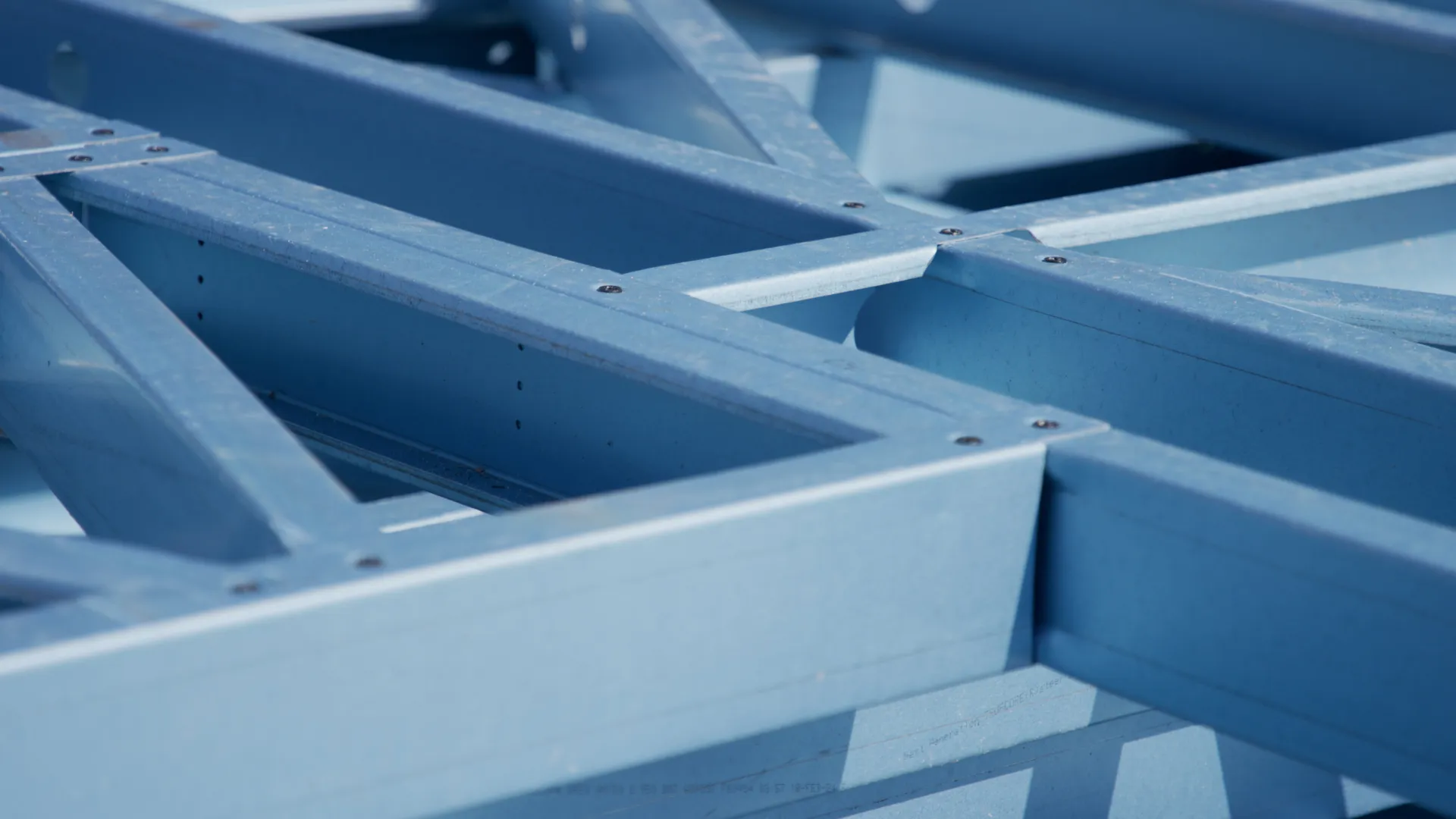
If you’ve been researching shed homes or kit homes in Queensland, you’ve probably come across the term TRUECORE® steel shed frames. It appears in product brochures, builder websites, and structural specifications — but what does it actually mean, and why does it matter for the home you’re planning to build?
In short, TRUECORE® steel shed frames use a high-strength, zinc-coated steel manufactured by BlueScope Steel specifically for residential framing. These frames form the wall structure, roof trusses, and key structural members of a modern steel-framed home — and they perform meaningfully better than generic steel framing in ways that have real consequences for how your home holds up over decades.
At The Shed House, every home we build uses prefabricated TRUECORE® steel shed frames. This guide explains what that means, how they compare to timber and portal frame alternatives, and why the difference matters for your build.
What Are TRUECORE® Steel Shed Frames?
TRUECORE® is a branded, quality-assured steel product from BlueScope Steel — an Australian manufacturer. BlueScope engineers and certifies it specifically for residential framing applications, so the steel meets consistent structural standards for use in homes rather than industrial or agricultural buildings.
The key characteristics of TRUECORE® steel shed frames include:
- High-strength steel — a greater strength-to-weight ratio than timber, so slimmer sections carry the same structural loads
- Zinc coating — corrosion resistance that matters in Queensland’s humid, coastal, and cyclone-prone environments
- Dimensional consistency — precise manufacturing tolerances mean every stud and track arrives at exactly the same size
- Termite resistance — steel is inert, so termites have nothing to feed on; no treatment and no ongoing infestation risk within the frame
- Non-combustibility — steel does not contribute fuel to a building fire, which is particularly important in bushfire-prone areas of the Sunshine Coast, Noosa, and Gympie hinterland
- Full recyclability — steel framing is 100% recyclable at end of life
Australian-made — BlueScope Steel manufactures TRUECORE® in Australia. As a result, every frame carries consistent quality, full traceability, and compliance with Australian Standards — rather than the variable quality control of an imported product.
How TRUECORE® Steel Shed Frames Work in Practice
At The Shed House, we use TRUECORE® steel specifically in the form of prefabricated wall frames. Rather than assembling loose components on your block, we manufacture the frames off-site in a controlled factory environment and deliver them ready for installation.
Our standard configuration uses 90mm TRUECORE® steel shed frames, with wall cavities typically between 90mm and 140mm depending on your cladding selection and external fixing method.
Wall cavity depth matters more than most people realise, because it directly affects insulation performance, usable internal floor area, and the ease of routing plumbing and electrical services through the walls. A thinner, more efficient wall system consequently means more living space inside the same external footprint.

See our comparison of prefabricated steel panels vs stick frame kit homes for a closer look at how our framing system differs from loose-stick alternatives.
TRUECORE® Steel Shed Frames vs Timber Framing
Timber framing has been the standard residential construction method in Australia for generations, and it works well. However, TRUECORE® steel shed frames offer several performance advantages that are particularly relevant for Queensland conditions — especially for the hinterland, rural, and coastal properties The Shed House typically builds on.
Termites
Queensland carries one of the highest termite pressures of any state in Australia. Timber framing — even treated timber — can become vulnerable when treatment degrades, when the frame absorbs moisture, or when chemical barriers fail over time. By contrast, TRUECORE® steel is inert: termites find no food source in the frame. There is no treatment to maintain and no risk of framing damage from infestation. For rural and hinterland builds where termite pressure is high, this structural advantage over timber is significant.
Movement and warping
Timber moves because it is a natural material. It expands and contracts as moisture and temperature change, which over time can cause frames to warp, twist, or bow. In Queensland’s humid summers and drier winters — and especially in the hinterland where temperature swings are more pronounced — this movement leads to plasterboard cracking, door misalignment, and long-term deterioration of the building envelope.
TRUECORE® steel shed frames are dimensionally stable. Steel does not absorb moisture, does not shrink as conditions change, and does not warp. The frame you erect stays exactly as built.
Precision
Steel manufacturing holds tolerances that timber simply cannot match. Every TRUECORE® stud leaves the factory at exactly the same size. That precision carries through to the prefabricated panel: window and door openings arrive at the exact specified dimensions, studs sit at accurate centres, and the frame needs no adjustment before it goes up.
In contrast, timber framing involves inherent variability — both in the material itself and in the on-site assembly process. An experienced carpenter manages this well. For a self-managed owner builder project, however, it is one of the most common sources of build quality problems.
Weight
TRUECORE® steel shed frames are lighter than equivalent timber framing. That weight difference makes panels easier to handle and erect on site — a practical advantage for owner builders and on sites with limited crane or machinery access, including many sloping blocks across the Sunshine Coast hinterland and Gympie region.

TRUECORE® Steel Shed Frames vs Portal Frame Sheds
This comparison matters most when you’re specifically considering a shed home, and it’s frequently misunderstood. So it’s worth being direct about the difference.
Traditional shed structures use large steel portal frames — the rigid columns and rafters visible in farm sheds and machinery buildings. These structures suit storage and industrial use well. However, significant problems arise when someone tries to convert a portal frame shed into a home.
The space problem
Portal frame systems need internal batten systems, custom stud walls, and often suspended ceiling systems before any surface can accept plasterboard, insulation, or residential finishes. The combined wall and ceiling buildup in a portal frame conversion commonly reaches 300–400mm per side.
On a 20m by 10m building, that wall thickness absorbs approximately 35–45m² of internal floor area. For context, many secondary dwellings in Queensland have a maximum gross floor area of 60m². Losing 40m² to wall thickness alone is therefore a fundamental problem.
Key figure — A portal frame conversion on a 20m × 10m building loses 35–45m² of internal floor area to wall and ceiling buildup. TRUECORE® steel shed frames with 90mm wall cavities recover most of that space.
The trades problem
Electricians, plumbers, plasterers, cabinet makers, and tilers work with residential stud framing every day — they know how to move through it efficiently. Portal frame conversions, by contrast, require non-standard fixing methods, custom detailing, and additional framing preparation at every trade stage. This adds both cost and time, often in ways that don’t appear on the initial quote.
The energy efficiency problem
Modern Queensland homes must meet a 7-star NatHERS energy rating. A purpose-designed TRUECORE® steel shed frame system achieves this through intelligent glazing, cavity insulation, cavity spacers, passive design, and thermal management — all working together as an integrated system. Because portal frame sheds were not designed around residential energy performance, retrofitting compliance into a converted shed is significantly more difficult and costly.
The condensation problem
Condensation is one of the most overlooked risks in shed-style construction. Large uninsulated steel surfaces in a portal frame create thermal bridging — points where temperature differences cause moisture to condense on interior surfaces. Over time, this produces mould, moisture damage, and degraded insulation performance.
By comparison, the TRUECORE® steel shed frame system The Shed House uses incorporates sarking, insulation, cavity spacers, and ventilation strategies that engineers design into the system from the start — not as a retrofit.
For more on how our framing system compares structurally, see our portal frame vs stud frame shed homes guide.
Quick Comparison: TRUECORE® Steel Shed Frames vs Timber vs Portal Frame
| Feature | TRUECORE® steel shed frames | Timber stud frame | Portal frame shed |
|---|---|---|---|
| Termite resistance | Full — steel is inert | Treated only, not guaranteed | Full — steel is inert |
| Movement & warping | Nil — dimensionally stable | Seasonal movement common | Minimal |
| Prefabricated panels | Yes — factory built | Varies by supplier | No — site assembled |
| Internal space loss | Minimal (90–140mm wall) | Minimal (90mm wall) | Significant (300–400mm) |
| 7-star energy rating | Achievable by design | Achievable by design | Difficult by design |
| Sloping block suitability | Excellent | Good | Limited — designed for flat slabs |
| Condensation management | Engineered into system | Requires careful detailing | Often overlooked |
| Window & door integration | Pre-engineered openings | Standard residential | Cut on site — less accurate |
| Trade familiarity | High — residential system | Very high — standard method | Low — non-standard |
| Mezzanine / open spans | Yes — designed in | Yes with engineering | Limited by portal legs |
Why TRUECORE® Steel Shed Frames Matter Specifically in Queensland
Queensland’s building environment is genuinely demanding. Coastal humidity, cyclone wind loads, termite pressure, hinterland temperature extremes, and the prevalence of sloping rural blocks all create conditions where the choice of framing system has real long-term consequences.
Wind ratings
Queensland imposes some of the most demanding wind load requirements in Australia, particularly in coastal and cyclone-prone areas. TRUECORE® steel shed frames comply with Australian Standards for wind loading, and the system includes tie-down and bracing details for high wind areas. Moreover, because the factory manufactures the frames, every connection and brace sits in exactly the right position — a level of consistency that on-site stick frame assembly cannot reliably guarantee.
Sloping blocks
The Shed House builds a large proportion of its homes on sloping blocks across the Sunshine Coast, Gympie, and Moreton Bay. Portal frame sheds anchor directly to flat concrete slabs, so sloping sites demand significant modification of the standard system. TRUECORE® steel shed frames, however, integrate with our engineered steel floor system, which engineers design specifically for sites with significant fall. The result is a home that sits properly on the land — without the earthworks and structural complications that portal frame conversions encounter on uneven ground.
Bushfire zones
Many Sunshine Coast and Gympie hinterland properties sit within Bushfire Attack Level (BAL) rated zones. Because steel is non-combustible, TRUECORE® steel shed frames simplify compliance with bushfire construction requirements under AS 3959. Timber framing in BAL zones requires additional protective measures; steel eliminates many of them at the frame level.
The Prefabrication Advantage of TRUECORE® Steel Shed Frames
TRUECORE® steel is only part of the story. Equally important is how The Shed House uses it — as prefabricated panels that we manufacture off-site in a factory, not as loose components that someone assembles on your block.
Factory prefabrication means:
- Every panel uses the same engineering specification
- Window and door openings arrive pre-cut to precise dimensions before the panel leaves the factory
- Studs sit at accurate centres and bracing is in the correct position
- Quality stays consistent across every panel, regardless of on-site conditions or the person doing the work that day
- On-site installation is faster — panels arrive ready to erect, not ready to assemble
For an owner builder managing their own construction, prefabricated TRUECORE® steel shed frames dramatically reduce the technical complexity of the framing stage. There is no measuring, no assembling individual components, and no squaring panels on site. The panel arrives and goes up.
For a professionally managed turnkey build, prefabrication accelerates the construction programme and reduces variability — which in turn produces more predictable build timelines.
See our staggered deliveries guide for how materials — including the wall frames — arrive in sequence to keep the site organised and construction moving efficiently.
Frequently Asked Questions About TRUECORE® Steel Shed Frames
Are TRUECORE® steel shed frames stronger than timber?
TRUECORE® steel carries a higher strength-to-weight ratio than timber, so it handles the same structural loads with a lighter, slimmer section. This allows thinner wall profiles without sacrificing structural capacity. Furthermore, a structural engineer certifies every Shed House build to the appropriate Australian Standards for specific site and load requirements.
Do TRUECORE® steel shed frames cause condensation issues?
Uninsulated steel conducts temperature and can create condensation risks — but this results from design and detailing decisions, not from the steel itself. The Shed House building system incorporates sarking, wall cavity insulation, cavity spacers, and ventilation strategies that work together to manage condensation within the building envelope. When builders detail steel framing correctly, it performs as well as or better than timber in condensation management.
Are TRUECORE® steel shed frames more expensive than timber?
The material cost of TRUECORE® steel shed frames is generally comparable to or slightly above treated timber framing. However, the full cost picture looks different when you factor in termite resistance (no chemical treatment required), dimensional stability (fewer rectifications over the building’s life), the speed of prefabricated panel installation (less on-site labour), and reduced pest management costs over time. For most builds, the total lifecycle cost of steel framing compares very favourably with timber.
Can TRUECORE® steel shed frames accommodate raked ceilings?
Yes — the TRUECORE® steel shed frame system The Shed House uses is specifically designed to accommodate raked and vaulted ceilings, which define the shed home aesthetic. The roof framing configuration suits traditional ceiling battens, roof batts, and the thermal management layers that energy compliance requires. This is a significant advantage over portal frame systems, where a clean raked ceiling requires boxing around large structural rafters.
See our raked ceilings design guide for shed homes for more on how this works in practice.
Are TRUECORE® steel shed frames suitable for owner builders?
Prefabricated TRUECORE® steel shed frames suit owner builders well, because the factory completes the complex assembly work before delivery. On site, the task becomes installation rather than fabrication — and that is considerably more manageable for an owner builder than assembling a stick frame from loose components. That said, frame installation still requires the right equipment, correct sequencing, and a clear understanding of the tie-down and bracing system. The Shed House provides detailed installation documentation and support for all kit-only and lock-up builds.
The Frame Behind Every Shed House Build
TRUECORE® steel shed frames are not a marketing claim — they are a specific, traceable, Australian-manufactured product with consistent quality standards, a proven track record in residential construction, and real advantages for Queensland’s building conditions.
Combined with factory prefabrication, TRUECORE® steel shed frames form the structural backbone of every home we build — whether that’s a turnkey family home in the Sunshine Coast hinterland, a kit-only owner builder project in Gympie, or a secondary dwelling in Moreton Bay.
If you’d like to understand how the framing system works for your specific design and site, we’re happy to talk it through.