
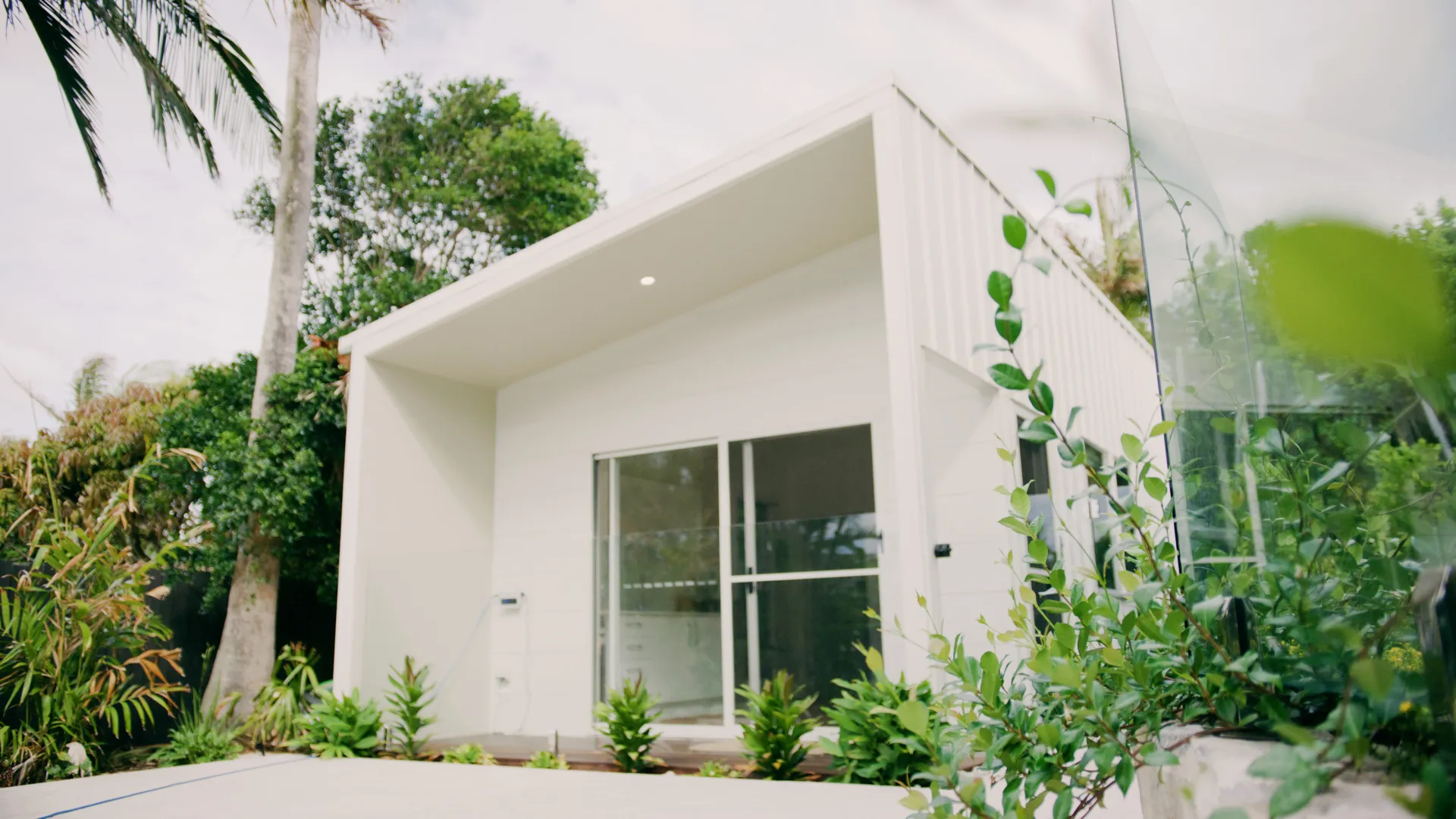
If you’ve been searching for a backyard office, studio or retreat, there’s a good chance you’ve come across backyard pods at Bunnings.
And it’s easy to see the appeal.
Bunnings currently lists a range of special-order outdoor structures, including DIY studios, offices and pod-style buildings from brands such as Quick Built and Elsewhere Pods.
At first glance, a hardware-store kit can look like a straightforward alternative to having a backyard POD designed and built for your property.
But the two options aren’t always like-for-like.
The real difference becomes clearer when you look beyond the structure itself and consider site preparation, foundations, installation, approvals, services, finishes, intended use and the amount of work you’re prepared to manage yourself.
So, if you’re comparing a cheap backyard POD from Bunnings with a purpose-designed POD, here’s what you should know before making a decision.
If you’re still working out exactly what a POD is and how it can be used, start with our guide to backyard PODs on the Sunshine Coast.
Backyard POD vs Bunnings Kit: Quick Comparison
| Consideration | Bunnings Kit or Outdoor Structure | Purpose-Designed Backyard POD |
|---|---|---|
| Best suited to | DIY buyers and straightforward backyard projects | Owners wanting a more complete, property-specific solution |
| Design | Predetermined models and sizes | Greater opportunity to select a design suited to the intended use |
| Installation | Often DIY or separately organised | Can be supplied through different levels of building involvement |
| Foundations | May need to be organised separately | Can be considered as part of the overall site and building solution |
| Site conditions | Best suited to compatible, relatively straightforward sites | Can better account for access, slope and site-specific requirements |
| Electrical and services | Generally require separate trades | Can be planned into the overall project |
| Internal fit-out | Depends heavily on the product selected | Can vary from kit-only through to a more complete build |
| Approvals | Owner needs to confirm requirements | Can form part of a broader building and approval process |
| Project management | Mostly owner-managed | More support available depending on build level |
| Ideal buyer | Confident DIYer prioritising upfront simplicity | Owner prioritising build quality, flexibility and a more complete result |
Neither approach is automatically better.
The right option depends on what you expect the finished space to do.
What Are the Backyard Pods Bunnings Sells?
One of the first things to understand is that there isn’t one single “Bunnings backyard pod”.
Bunnings currently lists a range of outdoor structures, including insulated modular studios and pod-style spaces. Elsewhere Pods describes its Bunnings range as covering modular homes and backyard studios, while Quick Built offers structures marketed for uses such as home offices, studios, gyms and teenage retreats.
That means anyone searching for cheap backyard pods at Bunnings needs to look closely at the individual product.
Ask:
- What exactly comes with the kit?
- Is a floor system included?
- Is insulation included?
- Are internal wall and ceiling finishes included?
- Are windows and external doors included?
- What foundation does it require?
- Who installs it?
- Are electrical works included?
- Is plumbing required?
- What approvals apply to your property?
- What is the structure actually approved to be used for?
The purchase price of the structure is only one part of the comparison.

The Biggest Difference: Buying a Product vs Planning a Project
This is probably the most important distinction.
Buying a Bunnings backyard structure is largely a product purchase.
You select a model, arrange delivery and then work out how that structure will become a finished space on your property.
A purpose-designed backyard POD is better viewed as a building project.
The structure still matters, but so do the block, access, foundations, intended use, positioning, services, approvals and finishing requirements.
That distinction becomes more important as the project gets more complicated.
A simple backyard art studio on a level suburban block can be very different from a home office on a sloping hinterland property.
The physical room may be similar in size, but the work required to put it there successfully may not be.
The Shed House’s Backyard Solutions range is designed around this broader idea of creating a usable space that works with the property, rather than simply supplying a standalone structure.
1. The Kit Price Isn’t the Finished Project Cost
This is where many budget comparisons become misleading.
A kit advertised online gives you a useful starting point, but it doesn’t necessarily tell you what the completed backyard space will require.
Depending on the product and your property, additional work may include:
- site preparation
- excavation or levelling
- concrete or engineered footings
- floor systems
- transport and site access
- assembly labour
- electrical connections
- data or internet connections
- air conditioning
- internal linings
- flooring
- painting
- decking or stairs
- drainage
- engineering
- building approvals
- plumbing, if required
This doesn’t mean a DIY kit is poor value.
For someone who already has building experience, access to trades and a simple site, taking responsibility for these items can be one of the reasons a kit makes sense.
But compare the finished project, not simply the initial kit.
2. DIY Can Save Money — If You Can Actually Do the Work
For the right person, DIY is one of the strongest arguments for choosing a hardware-store kit.
If you can assemble the structure yourself, coordinate trades and complete some of the finishing work, you may be able to reduce the amount of paid labour involved.
The important question is whether you genuinely want to take on that role.
Even structures specifically designed for DIY installation still require accurate assembly, weatherproofing, foundations and careful installation of components.
DIY works best when you go into the project expecting to manage a build, rather than expecting to unpack a finished backyard room.
If that sounds appealing, a kit can be worth considering.
If it doesn’t, compare the cost and effort of outsourcing those jobs before choosing based on the kit price.
The same principle applies to purpose-designed PODs. You don’t necessarily have to choose between doing everything yourself and having everything completed for you. Different levels of building involvement can provide a middle ground.
3. Your Site Can Change Everything
Backyards are rarely identical.
One property might have:
- flat ground
- wide side access
- good drainage
- easy connection to power
Another might have:
- a significant slope
- limited machinery access
- retaining requirements
- poor soil conditions
- bushfire constraints
- drainage challenges
Those differences can have more impact on the project than the POD itself.
A standardised structure can work very well when the site suits it.
On a more difficult property, however, the foundation and installation strategy become a major part of the project.
This is particularly relevant around the Sunshine Coast and Queensland hinterland, where sloping and irregular blocks are common considerations for backyard building projects.
A purpose-designed solution allows the POD and its supporting structure to be considered alongside the actual site rather than treating the building and the ground beneath it as two separate decisions.
If you’re considering adding a POD to an existing property, our guide to adding a backyard POD on the Sunshine Coast covers some of the property and planning considerations worth checking early.
4. What Will You Actually Use the POD For?
Before comparing products, define the job the backyard POD needs to perform.
There is a big difference between building a:
- hobby room
- garden studio
- home office
- gym
- pool room
- man cave
- teenage retreat
- flexible guest space
The more time people will spend inside the building, the more important comfort becomes.
Think about:
- insulation
- ventilation
- natural light
- window placement
- power
- heating and cooling
- acoustics
- moisture control
- internal finishes
Bunnings offers structures marketed for several of these purposes, including home offices, studios, gyms and teenage retreats.
The mistake is assuming that every structure marketed as a studio, cabin or pod is automatically equivalent to every other one.
Compare the specification as carefully as the appearance.
Building a Home Office?
A backyard office may not need the same features as a dwelling, but comfort still matters if you’re spending several hours inside it every day.
Natural light, insulation, ventilation, power points, data connections and air conditioning can make a major difference to whether the room works as a genuine everyday workspace.
You can read more in our guide to home office PODs and backyard approval requirements in Queensland.

Building an Art or Creative Studio?
Natural light, privacy and usable wall and floor space may matter more than residential-style features.
The Shed House’s Sunshine Coast Studios page shows how backyard PODs can be configured as art studios and other creative spaces.
Building a Teenage Retreat?
A separate backyard space can give teenagers more privacy while keeping them close to the main home.
However, the intended use of the structure still matters from a building and approval perspective.
Our guide to Sunshine Coast teenage retreats explains some of the considerations around creating this type of backyard space.
5. Does Bunnings Sell Tiny Homes?
This is where the terminology becomes confusing.
Bunnings currently sells backyard studios, office structures, outbuildings and Elsewhere Pods. Its Elsewhere Pods range specifically refers to modular homes and backyard studios.
But the phrases tiny home, backyard POD, studio, shed and secondary dwelling are not automatically interchangeable.
A structure that works perfectly as a backyard office does not automatically become a legally approved dwelling simply because you add furniture or a bed.
The proposed use matters.
If you intend to use the building for accommodation, particularly where kitchens, bathrooms or other residential facilities are involved, the approval and construction requirements can be different from those of a simple backyard office or hobby room.
This distinction is particularly important when comparing PODs with granny flats or other secondary dwellings.
For a more detailed explanation, see our comparison of a backyard POD vs a granny flat.
So instead of asking only:
“Does Bunnings sell tiny homes?”
A better question is:
“Does this particular structure meet the requirements for what I want to use it for on my property?”
6. Approvals Don’t Disappear Because It’s a Kit
One of the most common assumptions with small backyard buildings is:
“It’s only a small POD, so I shouldn’t need approval.”
That isn’t something you should assume.
Requirements can depend on factors including:
- the size of the structure
- its location on the block
- setbacks
- height
- zoning
- property overlays
- structural design
- intended use
- plumbing and services
Some Bunnings outdoor structures themselves note that a planning or building permit may be required.
This is another area where a cheap backyard POD can become more involved than expected.
The building might be straightforward.
Making sure it is suitable for your property and intended use can require additional work.
If approval is one of your main concerns, our Queensland home office POD approval guide is a useful next read.
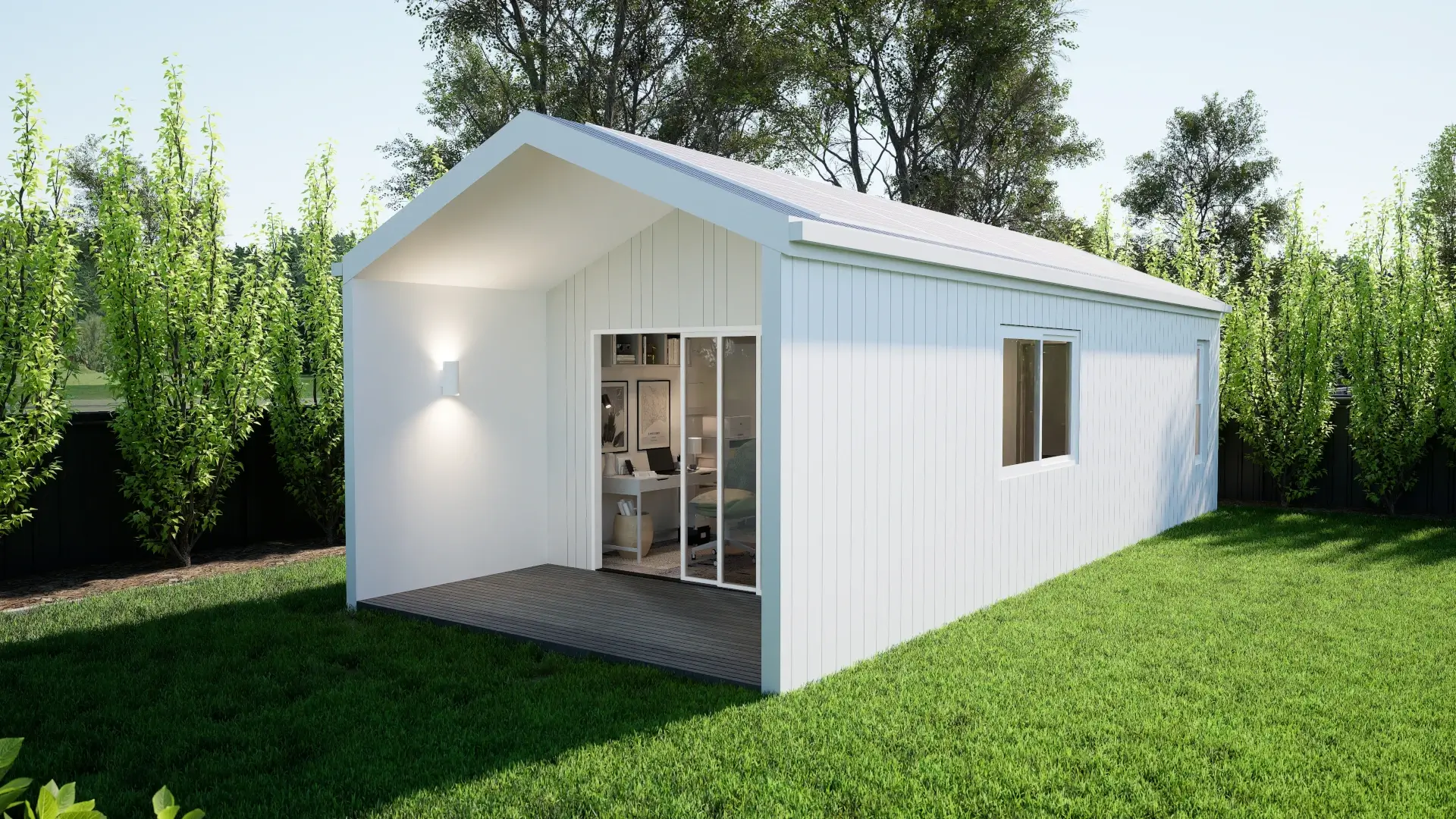
7. A Bunnings Kit Gives You More Responsibility
This can be either an advantage or a disadvantage.
If you’re comfortable managing a project, having more responsibility means more control.
You can organise your own trades, choose finishes, complete parts yourself and potentially spread the work across different stages.
But somebody still needs to coordinate:
- the site
- foundations
- delivery
- installation
- trades
- approvals
- internal work
- final finishes
With a retail kit, that person is generally you.
With a builder-supported backyard POD, more of those responsibilities can potentially be grouped into the overall project, depending on the level of service you choose.
If you want a clearer picture of what is involved from the early stages through to completion, see our guide to the Sunshine Coast POD build process.
Where The Shed House PODs Fit
The Shed House takes a different approach to backyard PODs.
Our POD Range is designed around creating functional additional spaces for Queensland properties, including uses such as offices, studios, retreats and other flexible backyard rooms.
The POD range is intended for people who want more than simply an extra shed in the backyard. Design, materials, positioning and how the room will actually be used all form part of the decision.
Rather than forcing every customer into the same level of building involvement, there are different ways to approach a project.
Kit-Only
A good option for experienced owner-builders or customers who already have their own carpenter and trades.
You take greater responsibility for the build while starting with a purpose-designed POD system.
Lock-Up
The structural exterior is completed to lock-up stage, leaving you to manage the internal finishing work.
This can offer a middle ground for people who want to contribute to the project without constructing the entire shell themselves.
Turnkey
For customers wanting a more complete solution, a turnkey build takes the project further through design, approvals, construction and handover.
The important point is that DIY doesn’t have to mean buying the cheapest structure available, just as choosing a professionally designed POD doesn’t necessarily mean handing over every part of the project.
There are different levels of involvement in between.
You can compare The Shed House’s current backyard designs and configurations on the POD Range page.
When a Bunnings Backyard POD Makes Sense
A Bunnings kit or outdoor structure could make good sense if:
- your site is relatively straightforward
- you’re comfortable with DIY construction
- you have access to reliable trades
- you understand what is included and excluded
- you’re willing to coordinate the project
- the structure’s intended use matches your needs
- you’re comfortable researching approvals yourself
- keeping the initial structure simple is the priority
For a garden studio, hobby room or straightforward backyard workspace, this can be a practical route.
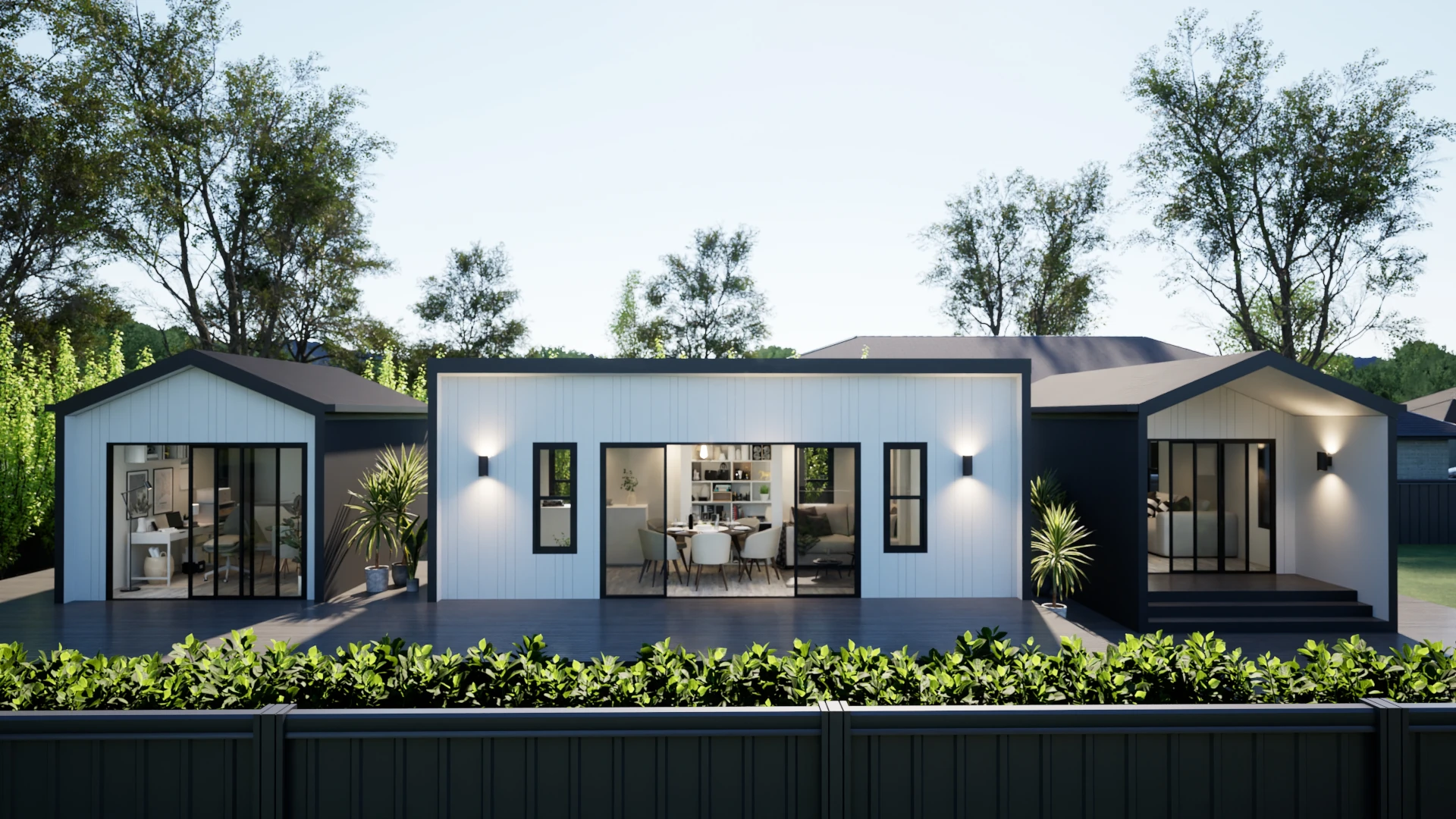
When a Purpose-Designed POD May Be Better Value
A purpose-designed POD starts becoming more attractive when:
- the site is sloping or difficult
- access needs to be carefully considered
- you’ll use the space regularly
- comfort and insulation matter
- you want a particular architectural look
- the POD needs to complement the main house
- you don’t want to coordinate every contractor yourself
- you want different levels of build support
- you need help navigating the building process
In these situations, value is less about finding the cheapest box and more about reducing uncertainty across the entire project.
You can explore the different possibilities on our Backyard Solutions page or browse the POD Range to see the designs available.
Cheap Backyard PODs: Ask What’s Missing, Not Just What’s Included
When comparing backyard pods from Bunnings or any budget portable building supplier, one simple question can reveal a lot:
What will I still need to organise after this arrives?
Make a list.
Include everything from the ground up until the room is genuinely ready for the purpose you have in mind.
That could mean considering:
- foundations
- site preparation
- assembly
- internal finishes
- power
- heating and cooling
- flooring
- access
- approvals
- professional trades
Then compare that with the alternative.
This is also why we recommend reading our guide to building a quality Sunshine Coast POD vs a budget portable building. It looks more closely at the differences that aren’t always obvious from product photos or an advertised starting price.
If flooring and internal finish quality are important to you, you can also read our guide to choosing flooring for a Sunshine Coast POD.
Backyard POD vs Bunnings Kit: Which Should You Choose?
If you’re a capable DIYer with a simple site and want a basic studio or backyard workspace, Bunnings has legitimate kit and modular options worth comparing.
But don’t make the decision based purely on which option appears cheapest online.
Look at:
- what arrives
- what still needs to be built
- who will build it
- what foundations it needs
- what services you’ll need
- whether approvals apply
- how comfortable the finished space will be
- what the building is actually intended to be used for
The cheapest structure and the best-value finished backyard room aren’t always the same thing.
A Bunnings structure may suit someone who wants to take control of a straightforward DIY project.
A purpose-designed POD may make more sense if you want the building, site, finishes and construction process considered together.
If you’d prefer a backyard space designed as part of a broader building solution — with the option to choose how involved you want to be in construction — explore The Shed House POD Range or take a look at our broader Backyard Solutions.
Frequently Asked Questions
Yes. Bunnings currently lists a number of outdoor structures and backyard studio products, including Quick Built modular studios and Elsewhere Pods.
The specifications and inclusions vary between products, so buyers should compare individual models rather than treating them as one standard type of POD.
Bunnings currently sells modular and pod-style structures, and its Elsewhere Pods range refers to both modular homes and backyard studios.
However, whether a specific structure can be used as residential accommodation depends on the product, its specification, your property and the relevant approval requirements.
A backyard studio should not automatically be assumed to be an approved dwelling.
If you're unsure whether you need a POD, tiny home or secondary dwelling, our guide explaining what a backyard POD is is a useful starting point.
Prices vary considerably depending on the product, dimensions and inclusions.
Rather than comparing the advertised structure price alone, calculate the likely total cost of foundations, installation, trades, approvals, services and finishing.
That gives you a much more useful comparison with a purpose-designed backyard POD.
Some Bunnings products are specifically designed around DIY assembly. Current Quick Built structures, for example, use pre-cut modular panels and provide installation guidance, while Elsewhere Pods also markets DIY-oriented backyard studio products.
You should still check the individual product requirements and determine which work needs licensed trades or professional installation.
Possibly.
Requirements depend on the structure, property and intended use, and some Bunnings outdoor structures specifically warn that planning or building permits may be required.
Before purchasing, confirm what applies to your property and what you intend to use the structure for.
For more information, read our guide to backyard home office POD approvals in Queensland.
It can have a lower initial purchase price, particularly when you're prepared to complete significant parts of the work yourself.
But that doesn't automatically mean the finished project will be cheaper.
For a useful comparison, include the structure, foundations, delivery, assembly, trades, services, approvals and finishing before deciding which option offers better overall value.
The key is to compare finished space with finished space, rather than kit price with completed project price.
Get Started Today
Our friendly team are ready to speak with you to discuss your project scope.