
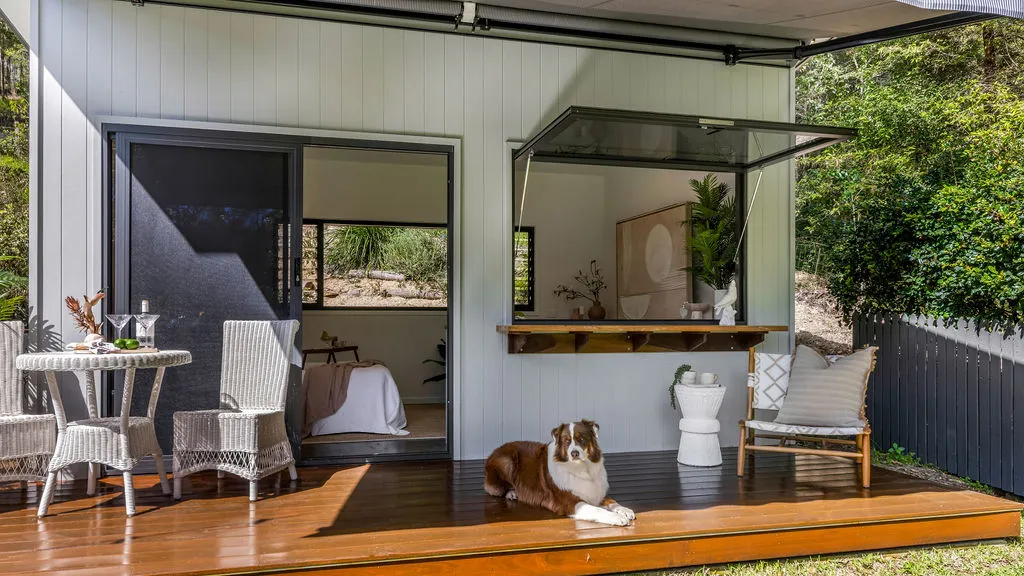
Yes, you may be able to put a tiny home on your property in Queensland, but the approval pathway depends on what the structure is, how it will be used and the rules applying to your land.
A fixed tiny home used for permanent accommodation is generally treated as a dwelling. It may be the main home on the lot, a secondary dwelling associated with an existing home or, in some circumstances, part of another residential land use. It must meet the relevant planning, building, plumbing and drainage requirements.
A tiny house on wheels is different. If it remains genuinely moveable, is not fixed to the land or connected to services and is used only for temporary accommodation, it may be treated as a caravan rather than a building. That does not automatically mean someone can live in it indefinitely. Council local laws can still regulate where and for how long it may be occupied.
The practical answer is therefore not simply yes or no. You need to confirm the proposed use, the classification of the tiny home and the constraints affecting the specific property before buying or installing it.
Tiny Home Rules in QLD: The Quick Answer
| Proposed setup | Likely treatment | Approvals to investigate |
|---|---|---|
| Fixed tiny home as the only residence | Dwelling house | Building and plumbing approvals; planning requirements for the lot |
| Fixed tiny home behind an existing residence | Secondary dwelling, if subordinate to the main home | Building and plumbing approvals; possible planning approval under the council scheme |
| Tiny home on wheels used temporarily and not connected to services | Caravan or temporary home | Vehicle requirements and any council local-law permit |
| Tiny home on wheels used as a permanent, serviced residence | May be treated as a dwelling regardless of its wheels | Planning, building, plumbing and drainage requirements |
| Several tiny homes on one property | Potential dual occupancy, multiple dwelling or relocatable home park | Planning approval is likely to require closer assessment |
| Tiny home used for short-term accommodation or a business | Use depends on the proposal and local planning scheme | Planning approval and other regulatory requirements may apply |
This table is a starting point only. Queensland’s planning framework sets statewide definitions, while local planning schemes, overlays and local laws affect what can happen on an individual site.
Are Tiny Houses Legal in QLD?
Tiny houses are legal in Queensland, but “tiny home” is a descriptive term rather than a single approval category.
Queensland’s planning framework looks at the structure’s characteristics and use. A self-contained residence fixed to land and capable of permanent occupation is treated as a dwelling. Depending on the site configuration, it could be classified as a:
- dwelling house
- secondary dwelling
- dual occupancy
- multiple dwelling
- relocatable home park.
The label used by a manufacturer does not override these definitions. Calling a structure a cabin, pod, transportable building or tiny house will not exempt it from normal residential requirements if it is installed and occupied as a permanent home.
The same principle applies to wheels. A trailer under the structure does not necessarily keep it outside the building framework if it is fixed in place, connected to utilities and used as a permanent residence.
Fixed Tiny Homes and Tiny Houses on Wheels
The first decision is whether the proposed tiny home will be a permanent dwelling or a genuinely temporary, moveable structure.
Fixed Tiny Home
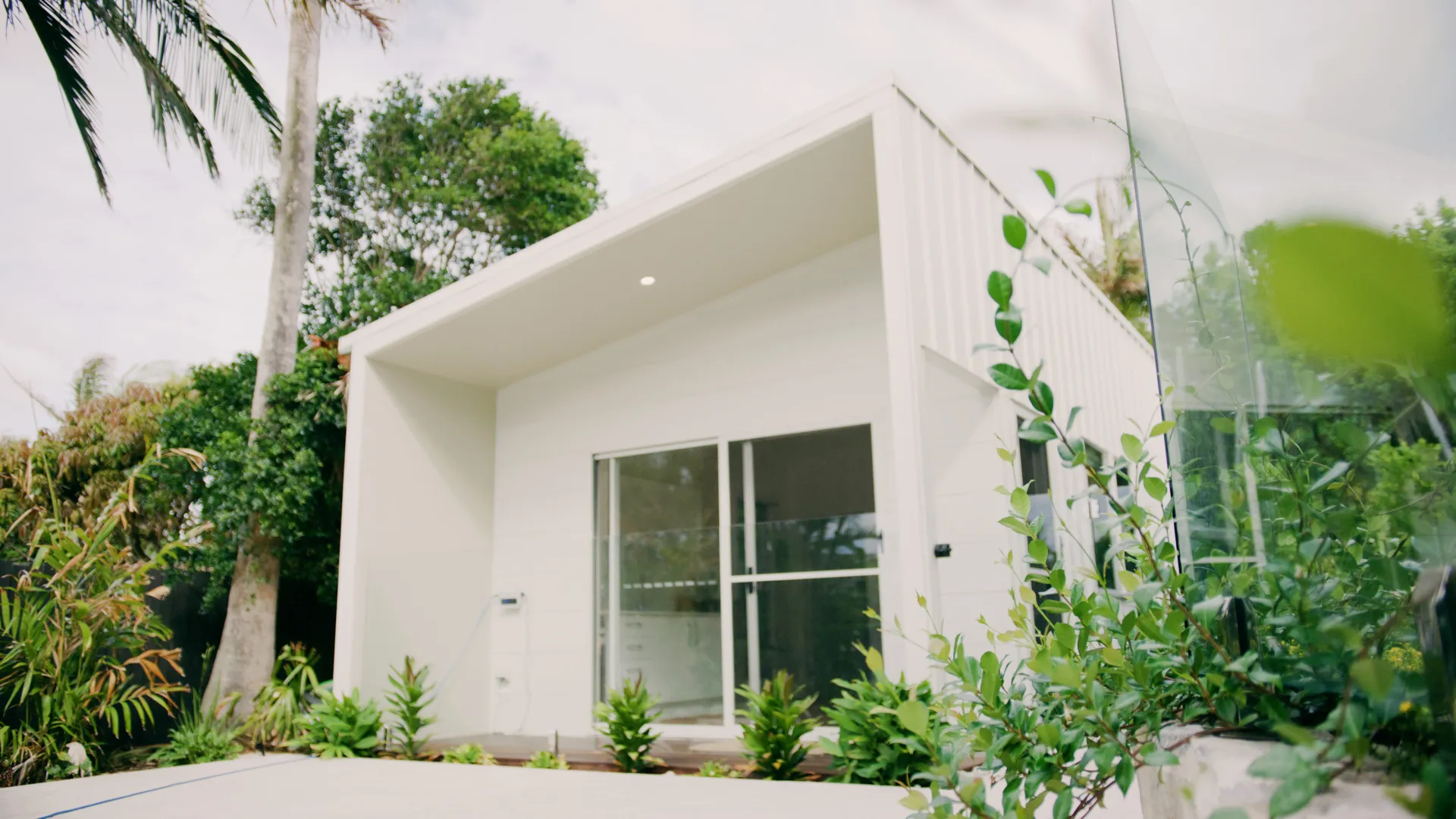
A fixed tiny home used as a residence is generally a Class 1a building under the National Construction Code. It needs to comply with the requirements applying to a new home, including structural performance, fire safety, weatherproofing, ventilation, sanitation and energy efficiency.
Building approval is required for new residential dwellings. Plumbing and drainage approval may also be required for connections such as toilets, showers, kitchens, laundries, water supply and wastewater disposal.
Before installation, a private building certifier should review the proposed design, engineering and site conditions. The Queensland Building and Construction Commission also advises homeowners to obtain supplier documentation, including engineering and tie-down details, and to use appropriately licensed contractors for installation work.
Tiny House on Wheels
A tiny house on a registered trailer may be treated as a caravan when it:
- remains moveable
- is not fixed to the ground
- is not connected to permanent services
- is intended for temporary rather than permanent accommodation.
In that situation, building approval may not apply in the same way as it would to a fixed dwelling. Transport and vehicle registration rules apply, and council local laws may restrict its occupation on private land.
For example, Sunshine Coast Council includes an unfixed tiny home on wheels within its definition of a temporary home and has a permit process for certain temporary living arrangements. Other Queensland councils apply their own local laws and time limits. A tiny house being legal to tow does not, by itself, make permanent residential occupation lawful on every property.
Do You Need Council Approval for a Tiny Home in QLD?
You will need building approval for a fixed tiny home used as a dwelling. Whether you also need planning approval from the local council depends on the proposed land use and whether the project meets the applicable requirements.
Queensland’s planning rules can prevent a council planning scheme from making a compliant dwelling house assessable development in certain circumstances. This means some proposals may not require a separate planning development application. The building work still needs to be assessed by a building certifier, and the project must comply with the relevant planning and building provisions.
If the tiny home will be a secondary dwelling, the Queensland Government advises that it will require building approval. You should also speak with the local council to determine whether a planning approval is needed under its planning scheme.
Planning approval is more likely to require detailed assessment when the proposal involves:
- non-compliance with accepted development requirements
- more than one additional dwelling
- short-term accommodation
- a home-based business or other commercial use
- constraints such as flooding, bushfire, landslide or coastal hazards
- a rural or protected regional landscape area
- unusual access, servicing or wastewater arrangements.
Our guide to granny flat approvals in Queensland explains the difference between planning approval and building approval in more detail.
Can a Tiny Home Be a Secondary Dwelling?
Yes. A fixed tiny home may qualify as a secondary dwelling when it is on the same lot as another dwelling and remains subordinate to that main residence.
The specific requirements vary between council areas. They may address:
- maximum floor area
- distance from the main dwelling
- setbacks from boundaries
- building height
- car parking
- private open space
- shared or separate services
- wastewater capacity
- access and emergency vehicle requirements.
A secondary dwelling is not the same as a dual occupancy. A secondary dwelling is smaller in scale and used in conjunction with the main home. Two dwellings of a similar scale, or a proposal functioning as two independent primary residences, may be treated as a dual occupancy instead. That change in classification can create a different planning pathway.
Queensland now allows a lawful secondary dwelling to be rented to someone who is not related to the occupants of the main home. This change did not remove planning, building, fire safety or other compliance requirements.
If you are considering a compact permanent home rather than a towable structure, it is also worth comparing tiny homes and modular homes. A council-approved modular dwelling is designed for permanent occupation and can offer a clearer compliance pathway.
What Property Rules Need to Be Checked?
Even a small building can be affected by significant site constraints. The floor area alone does not determine whether a project will be simple to approve.
Zoning and Intended Use
The property’s zoning helps determine the residential uses anticipated on the land. A single tiny home on a residential lot is different from placing several homes on rural land or operating visitor accommodation.
Overlays and Hazards
Flood, bushfire, landslide, biodiversity, coastal and heritage overlays may introduce additional siting, design or assessment requirements. On a constrained lot, the available building area can be much smaller than the backyard initially suggests.
Setbacks and Siting
The home must fit within the applicable boundary setbacks, height limits and site coverage rules. Existing houses, sheds, pools, easements and wastewater infrastructure can reduce the usable area.
Access and Delivery
Prefabricated and transportable homes need a workable delivery route and installation area. Narrow driveways, overhead powerlines, steep terrain and limited crane access can affect whether a design is practical.
Water, Sewer and Wastewater
The proposal needs lawful water, plumbing and wastewater arrangements. On an unsewered property, an existing on-site wastewater treatment system may need assessment or upgrading to support the additional occupancy.
Structural Engineering
Foundations and tie-downs must be designed for the site. Soil conditions, slope, wind classification and flood requirements can all affect the engineering. A prefabricated structure still needs site-specific support and certification.
Can I Live Permanently in a Tiny House on Wheels?
Do not assume that permanent occupation is allowed simply because the tiny house remains on a trailer.
The Queensland Government distinguishes temporary caravan-style accommodation from a home used permanently on-site. Local councils can regulate temporary homes through local laws, including permits, time limits and requirements for sanitation, wastewater, amenity and hazard exposure.
If a wheeled tiny home is permanently placed, connected to services and occupied as a residence, regulators may assess what is happening in practice rather than relying on the presence of wheels. A structure without the appropriate residential approvals may not be considered suitable or lawful for permanent living.
Check the council’s planning and local-law requirements in writing before purchasing the home. This is particularly important if a supplier says that no approval is needed.
What About Rural and Acreage Properties?
Large properties are not automatically exempt from residential development rules.
Rural zoning can make some types of development less suitable, particularly multiple permanent tiny homes. Properties in the Regional Landscape and Rural Production Area or Rural Living Area may also be subject to regional planning controls intended to protect rural production, landscape and environmental values.
Acreage can provide more physical space, but the project may still face constraints involving:
- zoning and regional planning policy
- bushfire access and defendable space
- flooding or steep land
- on-site wastewater disposal
- water supply
- driveway access
- distance from the main dwelling
- ecological or vegetation controls.
The correct approach is to assess the property, not just its size.
A Practical Approval Process
Before ordering a tiny home, work through the following steps.
- Define the use. Confirm whether it will be a primary home, secondary dwelling, temporary home, guest accommodation, rental or business space.
- Confirm whether it is fixed or moveable. Consider foundations, tie-downs, utility connections and how it will actually be occupied.
- Check the property. Review zoning, overlays, easements, setbacks, existing buildings, access and servicing constraints.
- Speak with the council. Ask both the planning department and the team responsible for local laws if a tiny house on wheels is proposed.
- Engage a building certifier. Confirm the building classification, documentation and approvals needed for a permanent dwelling.
- Review the supplier’s documents. Check structural engineering, materials, tie-down details, energy compliance and evidence that the design can meet Class 1a requirements.
- Assess services and site works. Obtain advice on plumbing, electrical work, water, sewer or on-site wastewater, foundations and site access.
- Obtain approvals before installation. Retrospective approval can be difficult, expensive or unavailable if the structure or siting does not comply.
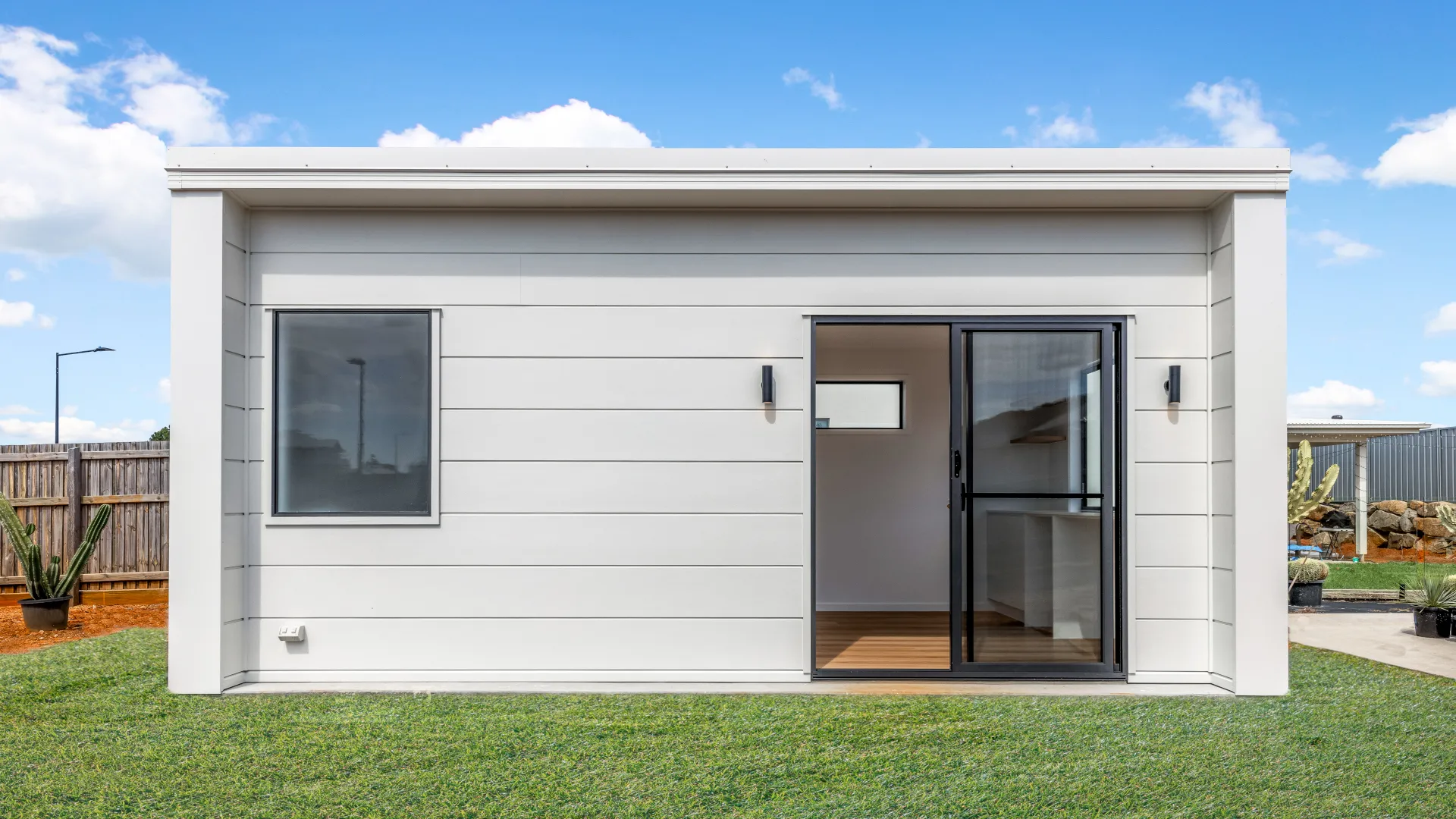
The Shed House begins site-specific projects with a preliminary proposal to identify the likely reports, planning constraints and construction considerations before detailed design proceeds. This early investigation helps avoid committing to a structure that cannot be lawfully or practically installed on the property.
Common Mistakes to Avoid
- Assuming a tiny home is exempt because it is below a particular floor area
- Relying on wheels alone to avoid residential building requirements
- Ordering a prefabricated home before checking access and crane requirements
- Treating a secondary dwelling and dual occupancy as the same land use
- Ignoring council local laws for temporary homes and caravans
- Connecting plumbing or wastewater without the required approvals
- Assuming rural land allows multiple dwellings
- Accepting a supplier’s general approval advice without a site-specific check
Frequently Asked Questions
Potentially, yes. If it is fixed and used permanently, it may be treated as a secondary dwelling and will require building approval. Planning approval depends on the proposal, property and council planning scheme. If it is a temporary tiny house on wheels, council local laws may still require a permit or restrict occupation.
A fixed tiny home used as a dwelling requires building approval, usually through a private building certifier. A separate council planning approval may or may not be required, depending on whether the proposal meets the applicable planning requirements. Plumbing and drainage approvals must also be addressed.
Not automatically. A moveable, unserviced tiny house used temporarily may be treated as a caravan rather than a building, but transport rules and council local laws can apply. Permanent occupation or connection to services can change how the structure is regulated.
A lawful secondary dwelling in Queensland can generally be rented to someone who is not related to the occupants of the main home. The dwelling must still meet planning, building, fire safety and tenancy requirements. Short-term accommodation may be treated differently under the local planning scheme.
Multiple permanent tiny homes may constitute a multiple dwelling or another land use requiring planning assessment. Rural zoning and regional planning controls can make this difficult even when the property is large.
No. The building still needs appropriate design documentation, engineering and site-specific approval. Foundations, tie-downs, energy efficiency, plumbing, drainage and installation work all need to satisfy the relevant requirements.
Check the Property Before Choosing the Home
You can put a tiny home on some Queensland properties, but the home and land must be assessed together. A fixed permanent dwelling follows a different pathway from a temporary tiny house on wheels, and local council rules remain important in both cases.
The safest first step is to confirm the intended use, property constraints and required approvals before paying a deposit or arranging delivery. If you are researching a project in South East Queensland, our Sunshine Coast tiny homes guide provides more local context.
Ready to Discuss Your Property?
The Shed House can help you understand the practical pathway for a compact home, secondary dwelling or backyard solution before design and construction begin.