
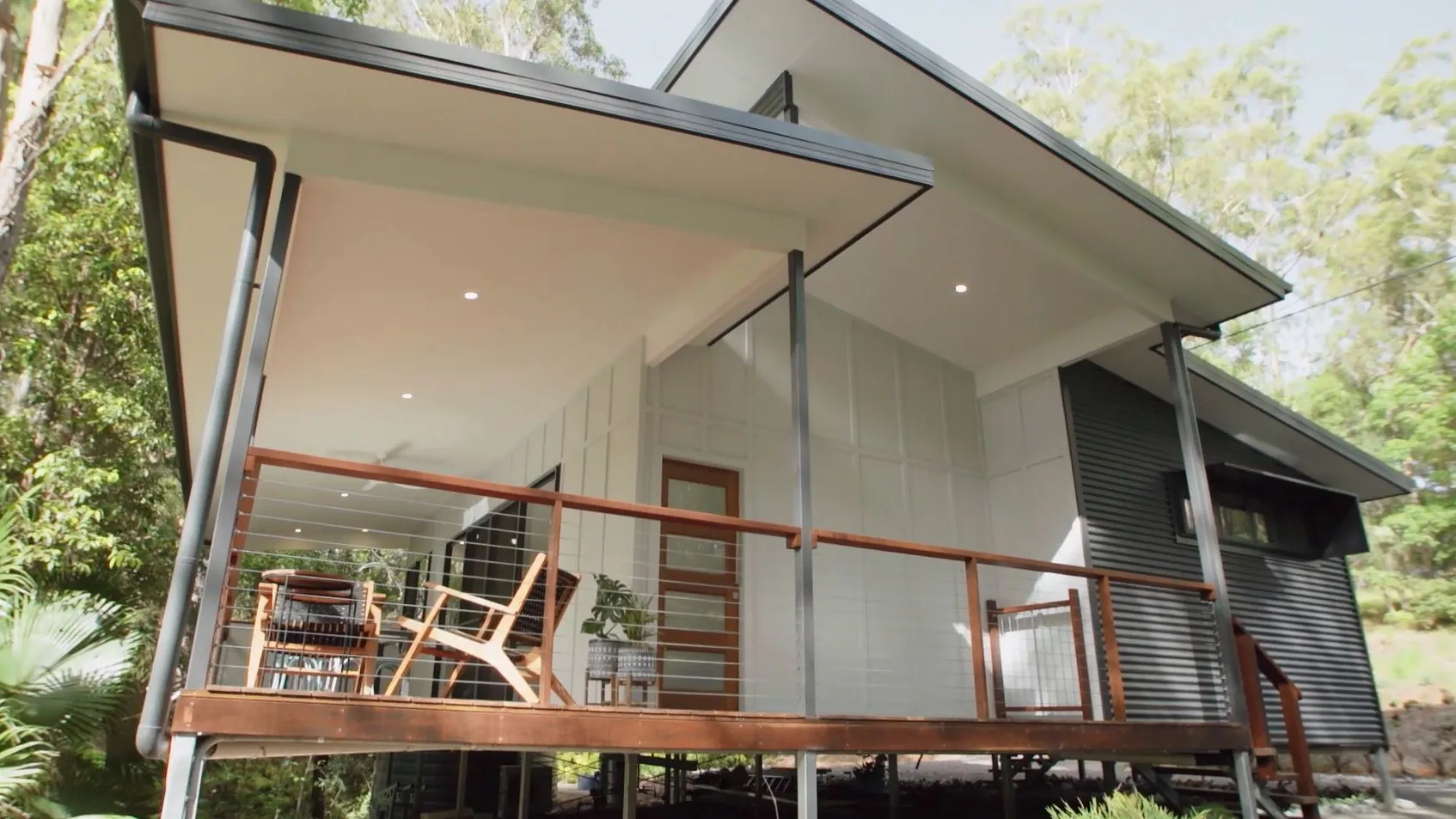
Deciding how best to support an ageing parent can be a difficult conversation. They may want to stay independent, you may want them closer to family, and everyone has their own idea of what the next stage of life should look like.
For some families, a retirement village provides the community and lifestyle they’re looking for. For others, building a granny flat creates a better balance between independence, privacy and having family close by.
Neither option is automatically right or wrong.
This guide compares granny flats and retirement villages from a practical point of view, looking at independence, family support, long-term flexibility and the design features worth considering if you’re planning a home for an ageing parent.
Quick Comparison: Granny Flat vs Retirement Village
| Factor | Granny Flat | Retirement Village |
|---|---|---|
| Proximity to family | Usually on the same property as family | Separate community or location |
| Independence | Self-contained home with private living spaces | Independent unit within a managed community |
| Support | Family nearby, with external or in-home support arranged if required | Services vary between villages |
| Property arrangement | Becomes part of the property where it is built | Ownership and occupancy structures vary between operators |
| Flexibility to modify | Can be designed around your family’s needs | Changes may be limited by the village or property arrangement |
| Ongoing costs | Normal household ownership and maintenance costs | May include service, maintenance and other village fees |
| Community | Family-centred | Community of residents at a similar stage of life |
Think of this table as a starting point rather than a final answer.
The better option will depend on your parent’s preferences, how much support they need, whether your property is suitable for another dwelling, and how their needs may change over time.
What a Retirement Village Offers
Retirement villages are generally designed for older people who want to continue living independently while becoming part of a community.
Depending on the village, residents may have access to shared facilities, organised activities, landscaped common areas and other services. For someone who enjoys meeting new people and wants a more social retirement lifestyle, that can be a genuine advantage.
It can also mean a significant lifestyle change.
Your parent may be leaving a long-term family home, familiar neighbours and the area they know. If their children and grandchildren live elsewhere, regular family contact may also require more planning.
The financial and legal arrangements vary considerably between retirement villages. Different operators can use different ownership, lease, licence and fee structures, so it’s important to understand exactly what is being offered rather than comparing villages on the advertised entry price alone.
Before signing an agreement, getting independent legal and financial advice is a sensible step.
What a Granny Flat Offers
A granny flat takes a different approach.
Instead of your parent moving into a separate community, they can live in a self-contained home on the same property as family while keeping their own space and routine.
That usually means their own entrance, kitchen, bathroom, bedroom and living area. They’re close enough to share meals, spend time with grandchildren or ask for a hand when needed, without feeling as though they’ve moved into somebody else’s house.
A thoughtfully positioned granny flat can create genuine separation between the two homes while still making day-to-day family support much easier.
It can also remain useful to the property as family circumstances change. What begins as a home for a parent may eventually serve another family member, guest accommodation or another suitable use, subject to the relevant planning and approval requirements.
If keeping generations closer together is part of your thinking, our guide to multigenerational living explores the idea in more detail.
Cost Considerations Over Time
It can be tempting to compare a granny flat and a retirement village using one headline figure, but the two options work very differently financially.
A retirement village may involve an upfront payment as well as ongoing charges. Depending on the agreement, there can also be costs associated with leaving the village or selling the right to occupy the property.
That’s why the contract matters just as much as the advertised price.
A granny flat generally involves the upfront cost of designing, approving and constructing the dwelling, followed by the normal costs associated with owning and maintaining a home.
There are also site-specific costs to consider. The block, access, slope, services, drainage, wastewater requirements and approval pathway can all influence the scope of a granny flat project.
Rather than asking only “Which one is cheaper?”, it can be more useful to ask:
“What are we paying for, what will we continue paying for, and what will we have at the end?”
For families considering a granny flat, understanding whether the property is suitable is an important first step. Our guide to granny flat approvals in Queensland provides a useful introduction to the planning side of the process.
You can also read our guide to downsizing to a granny flat for another look at how this type of living arrangement can work for older family members.
Independence vs Support: What Does Your Parent Actually Need?
This is often the most important part of the conversation.
The decision isn’t just about choosing between two types of housing. It’s about understanding how independently your parent lives today and what level of support they may need in the future.
If Your Parent Is Still Highly Independent
A self-contained granny flat can give them their own home and routine while keeping family nearby.
They can come and go as they please, have friends over, cook their own meals and maintain their privacy. At the same time, family is close enough to help with everyday tasks when needed.
A retirement village can also work well at this stage, particularly for someone who values the social side of village living and wants to be part of a community of people at a similar stage of life.
The deciding factor may simply be the lifestyle your parent prefers.
If Your Parent Needs Occasional Support
This is where designing ahead becomes particularly important.
A granny flat can be planned around changing mobility rather than waiting until accessibility becomes a problem.
A step-free entrance, wider doorways, an accessible bathroom and sensible circulation through the home can all make everyday life easier later without making the home feel clinical today.
Family members are also close enough to help with shopping, meals, appointments or other day-to-day tasks.
If Your Parent Needs Regular Care
Housing and care are two separate questions.
A granny flat can make family support easier and can work alongside appropriate in-home care services, but the dwelling itself doesn’t provide medical or nursing care.
Likewise, a retirement village shouldn’t automatically be assumed to provide aged-care services. The level of support varies between communities.
If your parent requires ongoing clinical care or supervision, it’s important to consider their care requirements first and then work out which living arrangement can safely support them.
Pension and Centrelink Considerations
Family granny flat arrangements can have Centrelink, pension, tax and estate-planning implications depending on how the arrangement is structured.
This is one area where it’s worth avoiding assumptions.
For example, there can be an important difference between simply building accommodation for a parent and entering into a formal financial granny flat arrangement involving a contribution or right to live in the property.
We’ve covered the subject separately in our guide to granny flat arrangements, family agreements and Centrelink.
Because everyone’s financial circumstances are different, speak with Centrelink and seek appropriate financial or legal advice before finalising a significant family arrangement.
Designing an Age-Friendly Granny Flat
One of the biggest advantages of building a granny flat is the opportunity to think about the person who will actually live there.
Rather than adapting an existing space after mobility becomes an issue, you can consider accessibility from the beginning.
That doesn’t mean the home needs to look like an aged-care facility.
Good accessible design is often simply good design.
Features worth considering include:
Step-free entry — reducing thresholds and level changes makes everyday access easier
Wider doorways and hallways — provides more comfortable circulation and room for mobility aids if they’re needed later
Single-level living — avoids unnecessary stairs and level changes
Accessible bathroom layout — consider a hobless shower, suitable circulation space and provisions for grab rails
Easy movement through the kitchen — enough space to move comfortably without awkward corners or tight clearances
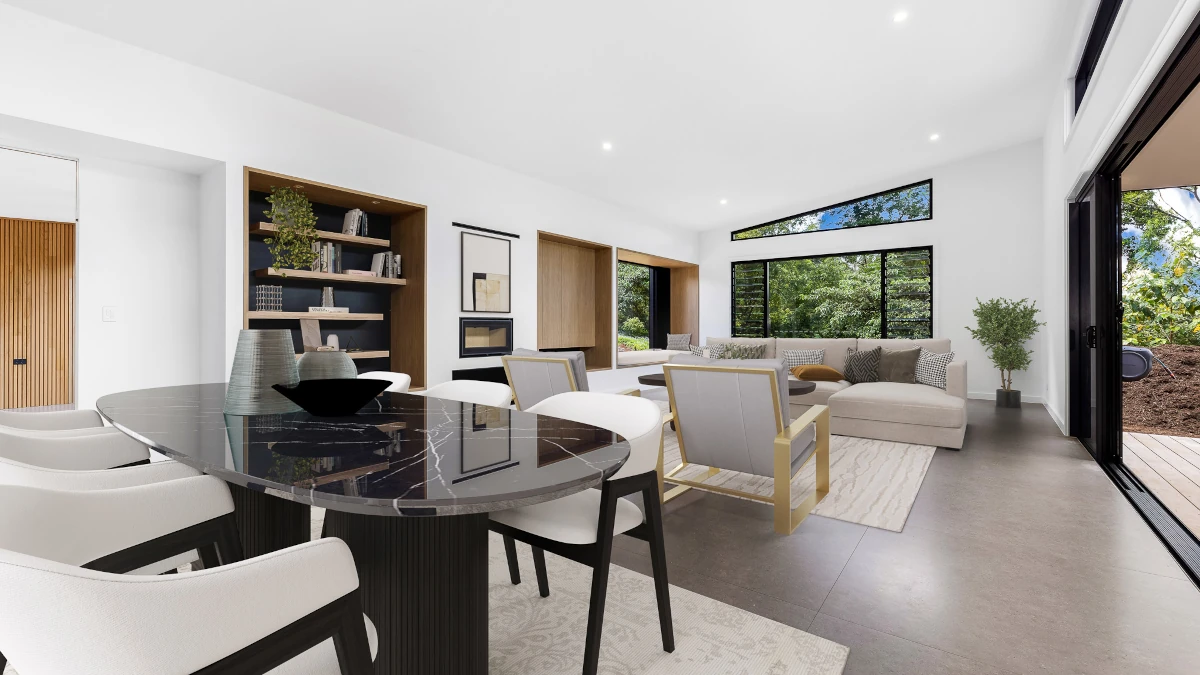
Good natural light and ventilation — creating a brighter and more comfortable home
Thoughtful placement on the block — close enough to the main house for family support without sacrificing privacy
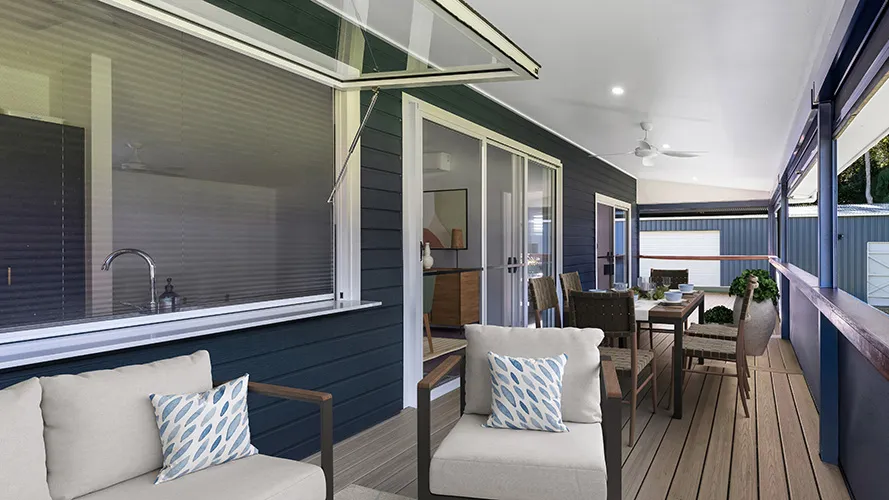
Low-maintenance outdoor areas — a patio, deck or small garden can provide useful outdoor living space without creating too much upkeep
Thinking about these features early gives the home a better chance of adapting with your parent rather than forcing another move later.
Our guide to wheelchair-accessible granny flats goes into these design considerations in more detail.
Don’t Forget the Block Itself
The floor plan is only one part of designing a granny flat for an ageing parent.
Where the dwelling sits on the property matters just as much.
Consider the path between the granny flat and the main house. A steep set of stairs or long uneven walkway can undermine an otherwise accessible design.
On sloping Sunshine Coast and hinterland properties, the relationship between the dwelling, driveway and existing home becomes particularly important.
It’s worth considering:
pedestrian access between both homes
driveway and vehicle access
gradients and stairs
privacy between living areas
outdoor lighting
drainage
connection to services
future mobility requirements
A well-designed granny flat should work with the property, not just fit into an available corner of the backyard.
Keeping Family Close: Why It Matters
For many families, the strongest reason for considering a granny flat has very little to do with the building itself.
It’s being close.
Grandchildren can see their grandparents as part of everyday life rather than only during organised visits. An ageing parent can maintain their own home while knowing someone they trust is nearby. Family members can check in without turning every visit into an event.
At the same time, everyone still needs privacy.
That’s why the layout and positioning of the two homes matter. Separate entrances, private outdoor areas and thoughtful orientation can help each household retain its own sense of space.
A retirement village offers a different type of connection: neighbours at a similar stage of life, organised activities and a ready-made social community.
For some parents, that’s exactly what they want.
For others, staying closely connected to their existing family is the bigger priority.
Granny Flat vs Retirement Village: Which Is Right for Your Family?
There’s no universal answer, but working through a few practical questions can make the decision much clearer:
Does your parent want to stay close to family, or would they enjoy living in a retirement community?
How independently do they live today?
What kind of support might they need in five or ten years?
Is your property suitable for another dwelling?
Can the granny flat and main house be positioned to provide both accessibility and privacy?
What ongoing costs come with each option?
Have you considered the Centrelink, legal and financial implications?
Most importantly, what does your parent actually want?
It’s worth having these conversations early.
Planning ahead usually gives families more options than waiting until a health issue or change in circumstances forces a quick decision.
Frequently Asked Questions
Not necessarily. The two options have very different financial structures.
A granny flat generally involves the cost of designing, approving and building the dwelling, followed by normal property running and maintenance costs. Retirement-village arrangements can involve upfront and ongoing fees, with the exact structure varying between operators.
The better comparison is the total financial arrangement over time, not simply the initial cost.
Yes. A granny flat can be designed around the needs of an ageing parent, including accessibility, privacy, mobility and possible future changes.
Planning these requirements from the outset is usually easier than trying to retrofit them later.
It can, depending on the financial and legal arrangement.
Our guide to granny flat arrangements and Centrelink explains the topic in more detail. Because individual circumstances vary, it's also worth speaking directly with Centrelink and obtaining professional financial or legal advice where required.
A step-free entrance, wider doorways, single-level living, an accessible bathroom and easy movement throughout the home are all worth considering.
The location of the granny flat on the property is important too. Safe, practical access between the granny flat, driveway and main house can make a big difference as mobility changes.
Potentially, but the care arrangement needs to be considered separately from the dwelling.
A granny flat can make it easier for family members to provide support and may work alongside professional in-home care. If your parent requires ongoing nursing, medical supervision or a higher level of care, seek professional advice about the most appropriate living and care arrangement.
Thinking About a Granny Flat for Your Family?
If keeping an ageing parent close feels like the right direction, the next question is whether a granny flat will actually work on your property.
That’s where the block matters.
Access, slope, services, approvals and the position of the existing home can all influence what’s possible.
The Shed House team can help you look at the practical side of the project and explore a granny flat design that gives your parent their own space while keeping family close.
Get Started Today
Our friendly team are ready to speak with you to discuss your project scope.